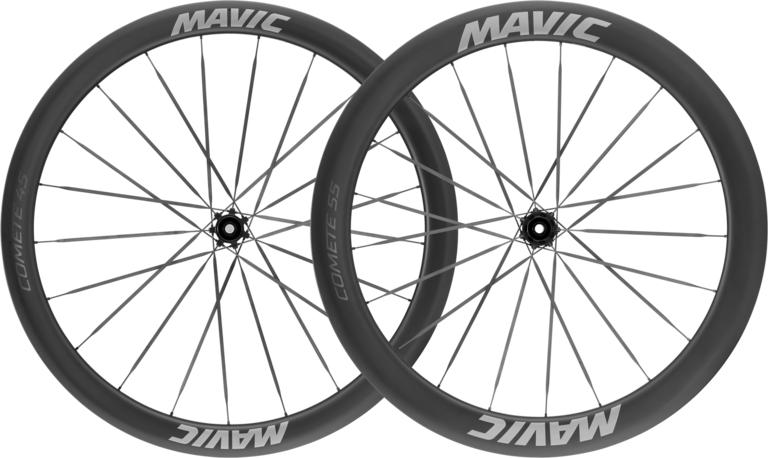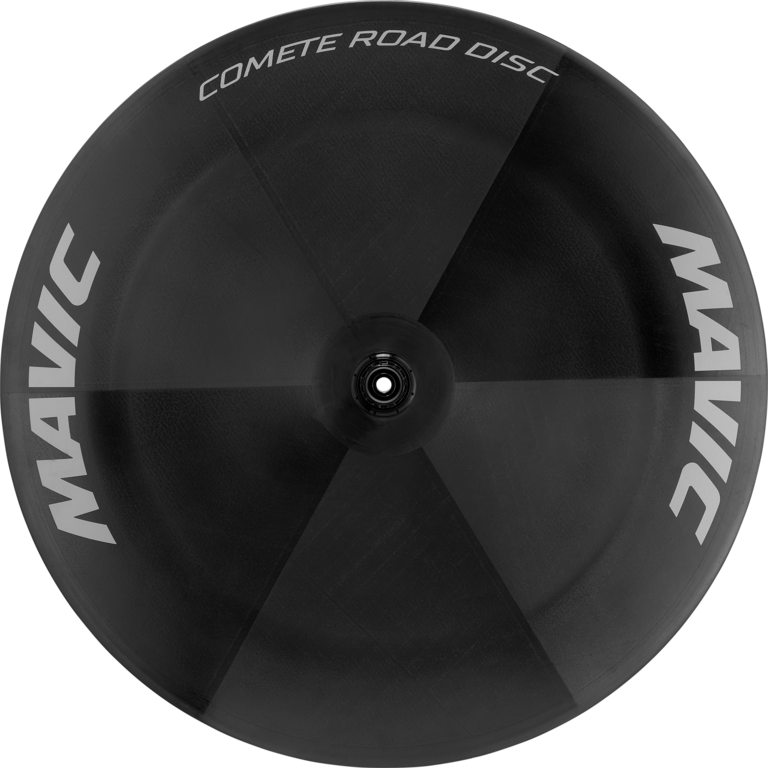
€2,599.00

An IRONMAN wheel set-up is decided by the race rules first, then by rim depth and wind: across the Comete range of carbon road wheels, aerodynamic rims from 45 to 85 mm pair up with a full disc rear wheel. Dylan Magnien, Mavic athlete and winner of IRONMAN Lanzarote 2025, sets out how he matches his wheels to the course and the weather.
Which wheels for an IRONMAN:
Dylan Magnien sees the bike leg of a triathlon as a matter of maximum speed for minimum energy, so that he keeps as much strength as he can for the run. Once the race rules have been checked, aerodynamics become the deciding factor in his choice of triathlon wheels.
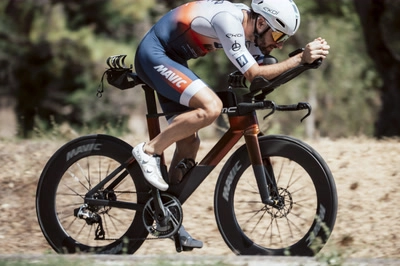
The 2026 IRONMAN rules permit a disc wheel at the rear but, for safety reasons, ban it at the IRONMAN World Championship in Kona and at a number of other races, with disqualification as the penalty. The rule has applied at IRONMAN and IRONMAN 70.3 races since 2 March 2026, to professionals and age-groupers alike.
Only Kona was named in the 2025 rules. The reference to a number of other races, added in 2026, is reason enough to read your race’s Athlete Information Guide, which sets out its wheel restrictions, notably for a disc wheel in triathlon. Dylan Magnien puts this at the top of his list: ‘When choosing wheels, the first thing to consider is the regulations’, as at Kona, where discs are not allowed.
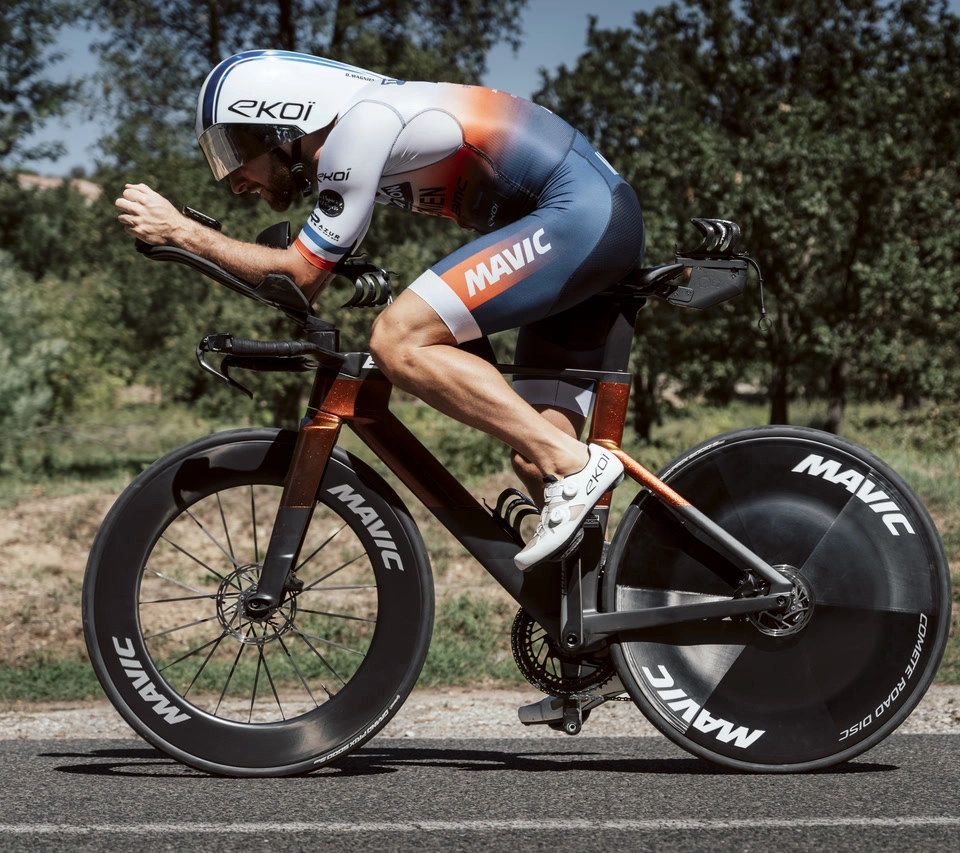
The Comete 85 carbon road wheels were developed as time trial wheels and triathlon wheels, for Kona as for every other IRONMAN. The Comete Road Disc carbon road wheel completes them for time trials and triathlons that allow a full disc at the rear. Together they make up the triathlon and time trial wheels of the Comete range.
The rear wheel is much less affected by crosswinds than the front, so it can carry the most aerodynamic profile on the bike: a disc wheel where the race allows one, the deepest rim where it does not. Dylan Magnien says he always races with a disc at the rear: in his view, a disc is the most aerodynamic choice, and the gains it brings at his racing speeds are really valuable.
The Comete Road Disc carbon road wheel fills this role with full carbon flanges, whose wave shapes steer the airflow. Its asymmetric profile offsets the asymmetry of the drivetrain. In practice, not a single spoke is exposed to the air.
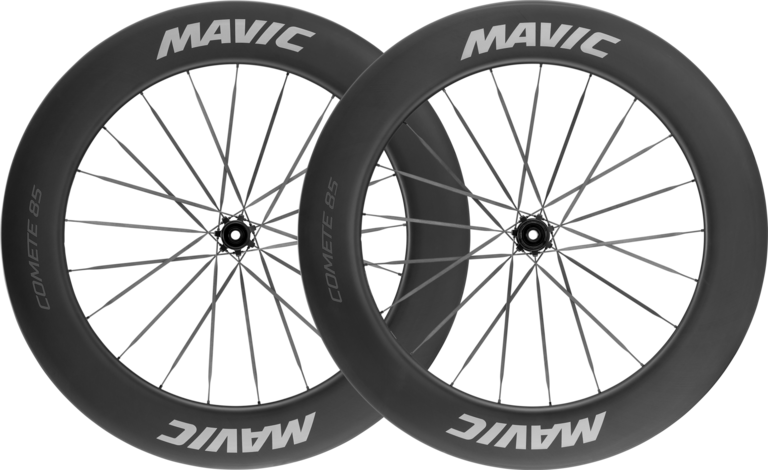
For Kona race wheels, where a disc is ruled out, the Comete 85 carbon road rear wheel steps in, with an 85 mm rim and 21 aero carbon spokes. With discs banned at Kona, Dylan Magnien looks for the deepest, most aerodynamic rear wheel available: ‘The Comete 85 is really ideal for the rear at Kona.’
Front rim depth is set by the course profile and the forecast wind, because the front wheel catches the gusts and can push you out of the aero position. On a fully flat, windless course, Dylan Magnien would choose a Comete 85 carbon road front wheel to get the most from its aerodynamics. On a hilly course, he would probably go for a Comete 50 or Comete 65 carbon road wheel, to make the bike lighter and quicker to accelerate and respond on the climbs.
At Kona, depending on the forecast, he prefers a slightly shallower front wheel, so that strong crosswinds do not push him around too much. He also warns that a Comete 85 at the front costs more time than a Comete 50 if every gust forces you off your tri bars, since the shallower wheel would let you keep your aero position even when the wind is up. The limit for a front wheel in crosswinds is therefore set by whether you can stay on the extensions.
The mixed-depth pairs of the Comete 45/55 and 55/65 aero wheels combine a deeper rear wheel, which cuts drag, with a slightly shallower front wheel, for handling and stability in gusts.
| Wheel | Depth | Internal width | Weight | Price | Position and recommended use |
| Comete 85 carbon road wheels | 85 mm | 23 mm | 820 g front, 930 g rear, 1,750 g per pair | €1,149 front, €1,350 rear, €2,499 per pair | front: flat, no wind; rear: disc banned |
| Comete Road Disc carbon road wheel | full disc | 23 mm | 965 g | €2,599 | rear, disc allowed |
| Comete 50 carbon road wheels | 50 mm | 23 mm | 600 g front, 1,315 g per pair | €1,149 front, €2,499 per pair | front: crosswinds, hilly course |
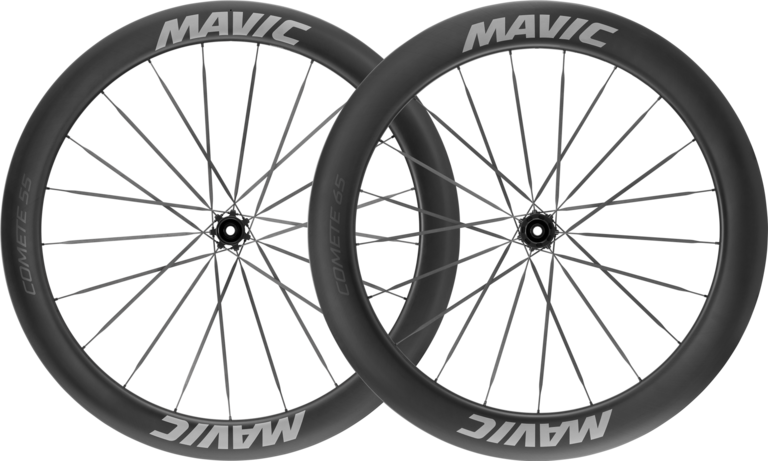
| Comete 65 carbon road wheels | 65 mm | 25 mm | 640 g front, 770 g rear | €1,149 front, €1,350 rear | front: hilly or windy course |
| Comete 55/65 carbon road wheels | 55 / 65 mm | 25 mm | 1,390 g per pair | €2,499 per pair | fast, hilly courses, under 1,500 m of climbing per ride |
| Comete 45/55 carbon road wheels | 45 / 55 mm | 25 mm | 1,350 g per pair | €2,499 per pair | mountainous courses and big climbs |
A triathlon wheel set-up is proven in training, on terrain and at an average speed close to those of the race, well ahead of race day. For amateurs and professionals alike, Dylan Magnien believes that being able to try your wheel set-up before the event is important.
Aerodynamic gains rise with average speed, so build your IRONMAN wheel set-up around your actual pace. Rim depth for triathlon therefore depends on average speed as well as on the course profile: a rider on the bike for five hours will not necessarily need the same wheels as one who completes the leg in four.
On a hilly course, Dylan Magnien recommends checking, at your own average speed, whether a disc wheel and its aerodynamic gain outperform a lighter, more responsive wheel with a shallower rim. Try the front wheel you intend to use in crosswinds as well: your position on the tri bars has to hold through every gust.
Getting your IRONMAN wheel set-up right comes down to matching aerodynamics to your speed and to the wind: at the rear, a disc or an 85 mm rim depending on the rules, weighed against a shallower profile on a hilly course; at the front, whichever profile the day’s wind lets you hold. Check the Athlete Information Guide before settling on the rear wheel, then test the whole set-up.
The six models in this guide, all from the Mavic carbon road wheels range, share the Aero Wide rim, the ID360 system and Mavic Ceramic bearings. Comete 85 and Comete Road Disc carbon road wheels were on Heïdi Gaugain’s bike when she won the C5 time trial at the Para-cycling World Championships: Heïdi Gaugain wins gold in Huntsville.