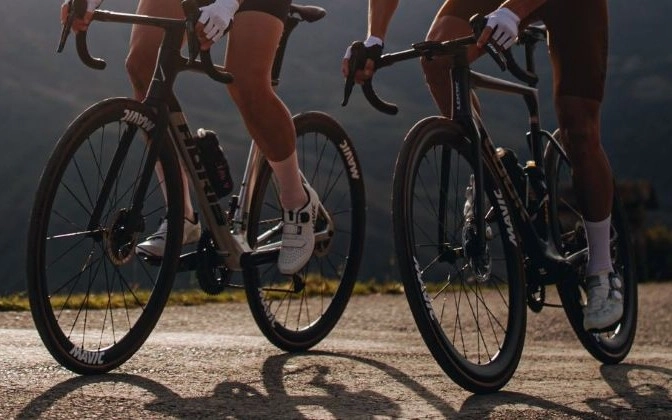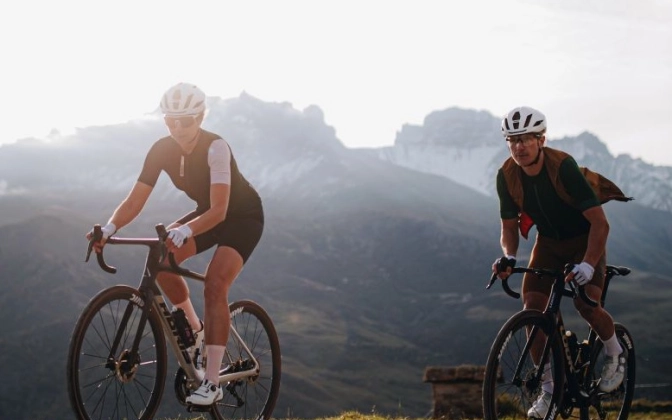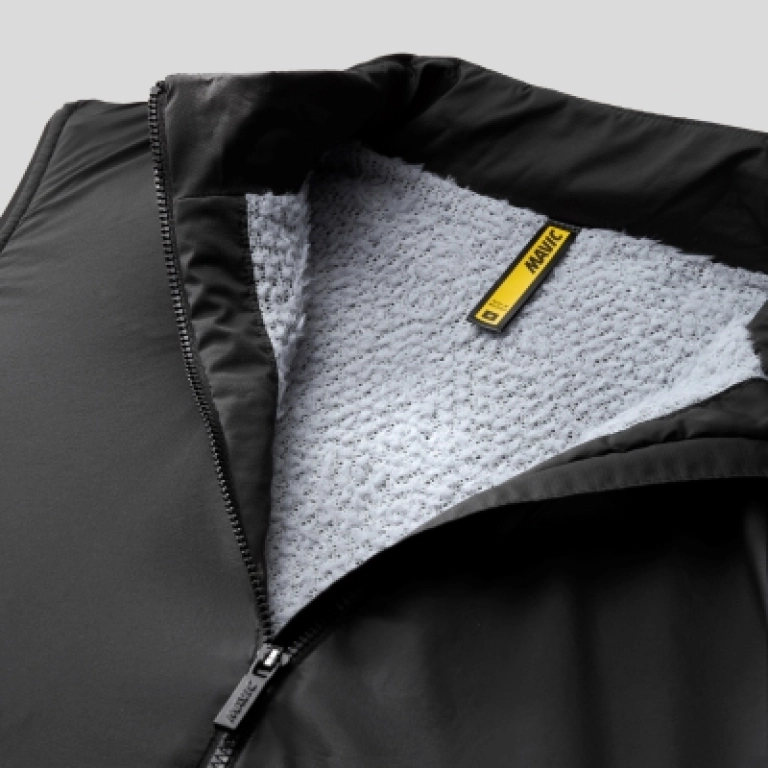
Our Body Mapping designs place protection where it’s needed, whilst smart insulation such as Polartec® Alpha® helps retain heat without overheating.
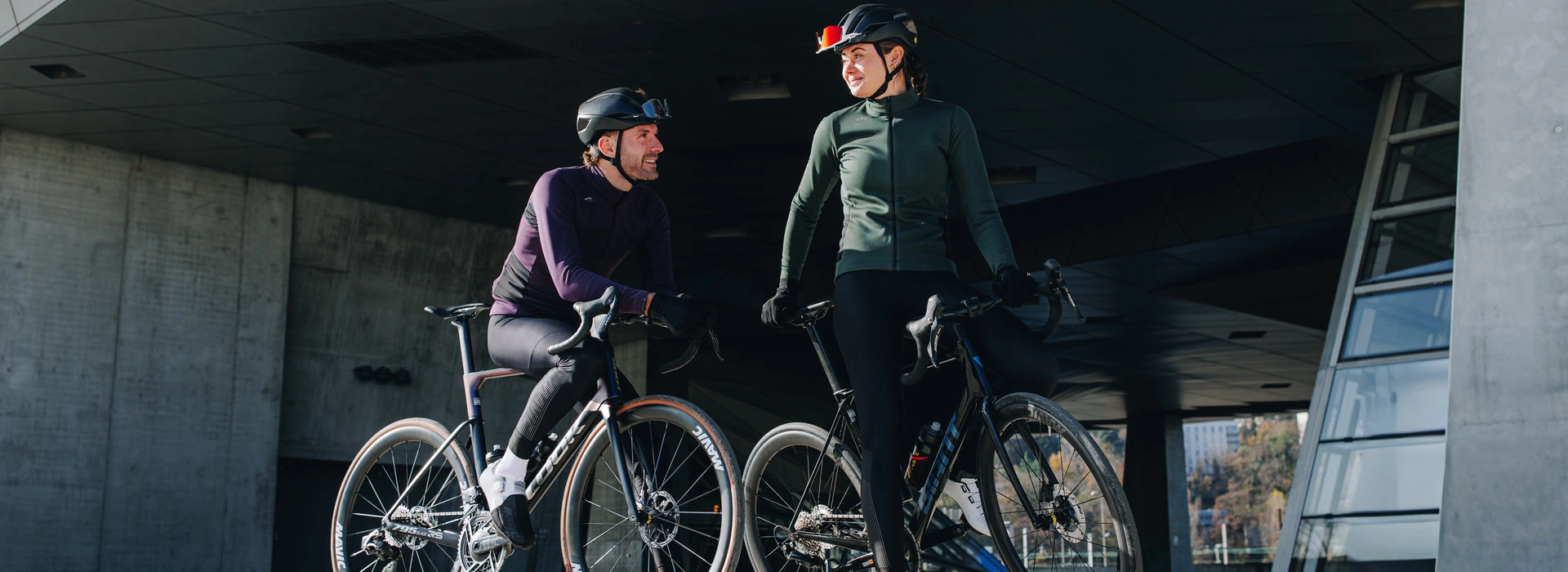
When conditions get tougher, performance comes down to every detail. A winter road cycling kit is built up in layers, from the winter collection of road cycling clothing, designed to support you on the road when the cold, wind and rain set in: technical garments designed to protect, regulate body heat and allow you to stay focused on your ride. This guide explains how to put these three layers together and what role each item in the road range plays.
Which cycling outfit for which winter road conditions:
The following section details this method layer by layer, then explains how to adapt your winter kit to the conditions on the day.
The three-layer system forms the basis of any effective road cycling outfit in winter: a base layer that wicks moisture away from the skin, an insulating layer that retains the heat generated by exercise, and a protective layer that blocks wind and water. These three functions cannot be substituted for one another: a jacket worn on its own over a summer jersey leaves moisture trapped against the skin.
The Baselayer LS road base layer is worn from autumn to spring, under an insulating layer or a protective layer: it is the garment that stays in place whilst the other two are adjusted to suit the wind, rain and duration of the ride. The three-layer cycling system is primarily designed to allow for this range of adjustment.
The right kit for a road ride depends on the actual conditions on the day, such as the temperature at the start, wind, rain and the duration of the ride, rather than on the thermometer alone.
When the temperature approaches zero, the insulating layer is supplemented by a thermal jacket, worn over the base layer and long-sleeved jersey.
The same guidelines apply to women’s road cycling clothing, where thermal and water-repellent items follow the same layering system, and setting off at dawn or returning after dark adds one final consideration: visibility.
Set off slightly less wrapped up than your current sensation suggests: the first few minutes are the coldest of the ride, then your body temperature rises as soon as you start pedalling.
In a winter outfit, the base layer wicks moisture away from the skin and the insulating layer retains the heat generated by exercise. When choosing a long-sleeved thermal base layer, the key factor is how quickly it dries, as a fabric that retains water keeps the skin damp. The Baselayer LS road base layer, a men’s cycling base layer with a structured square-mesh fabric, features micro-ventilation that allows air to circulate and speeds up drying.
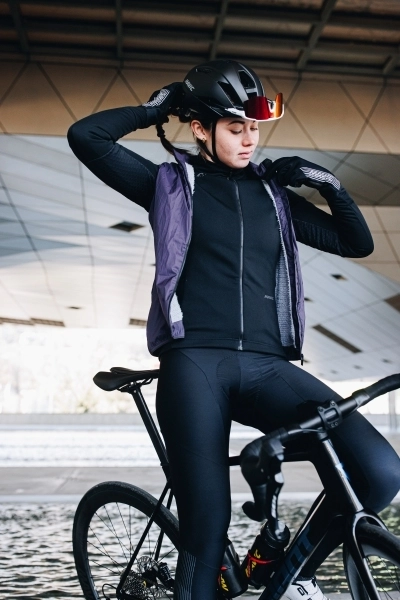
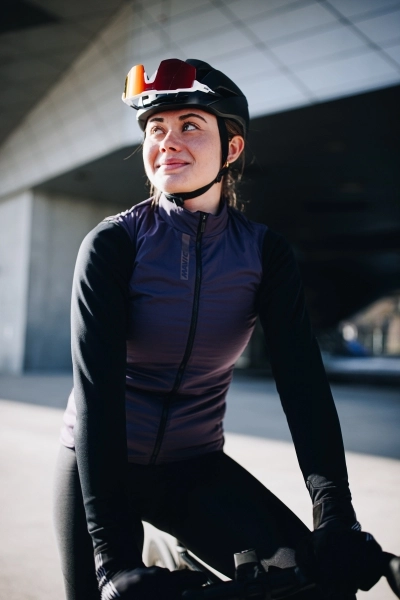
The insulating layer should be chosen according to how long the cold is expected to last: the Aksium Thermo Jersey is ideal for rides where the cold persists from start to finish. The Ksyrium Thermo Vest, meanwhile, features Polartec® Alpha® insulation, combined with windproof and water-repellent properties. Designed for autumn and spring, it is a windproof vest for the transitional seasons, and a mid-layer under a jacket in the depths of winter.
Warmth, in the right place, at the right time: our approach to thermoregulation is to strike the right balance between protection, warmth and breathability. Our Body Mapping designs place protection where it’s needed, such as on the Cosmic TH Hybrid road cycling jacket, which combines a warm fleece with a lightweight, windproof fabric on areas exposed to the wind. Smart insulation such as Polartec® Alpha® helps to retain heat without overheating: during intense exertion, they wick away moisture to keep you dry, and when you’re on a descent, they help keep you warm and dry, ensuring constant thermal comfort.
Our Body Mapping designs place protection where it’s needed, whilst smart insulation such as Polartec® Alpha® helps retain heat without overheating.
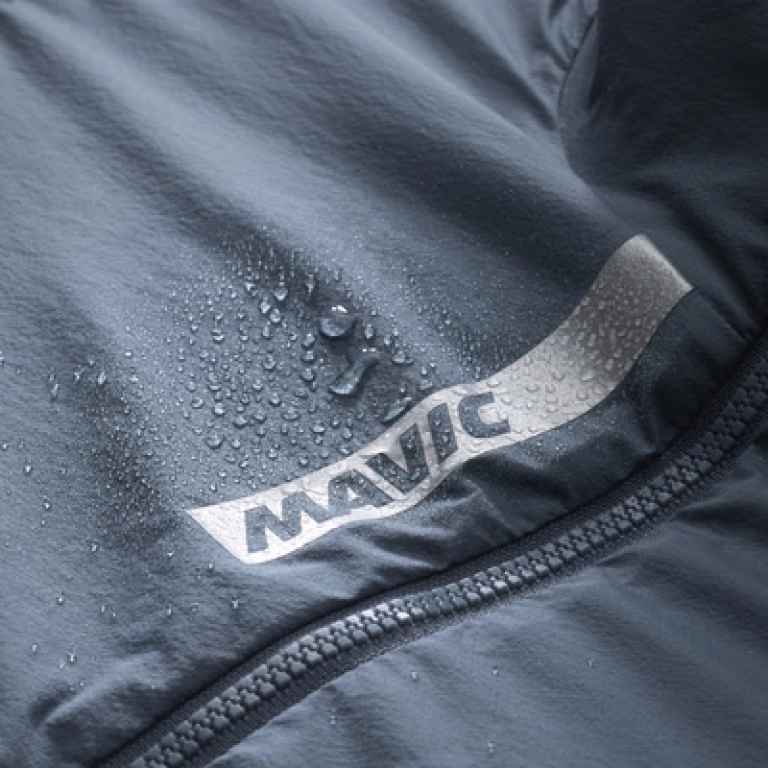
When the rain gets heavier, the Cosmic H2O Jacket offers extreme waterproofing to keep you dry, even when conditions become particularly challenging.
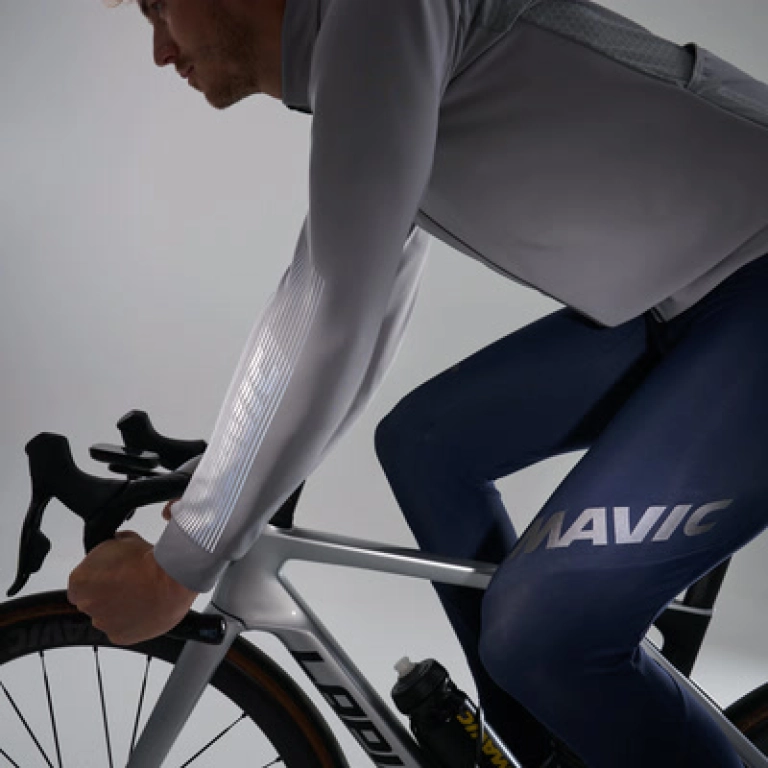
Almost invisible by day, essential when the light fades. Our reflective details blend discreetly into the design of our garments, without ever compromising their aesthetics.
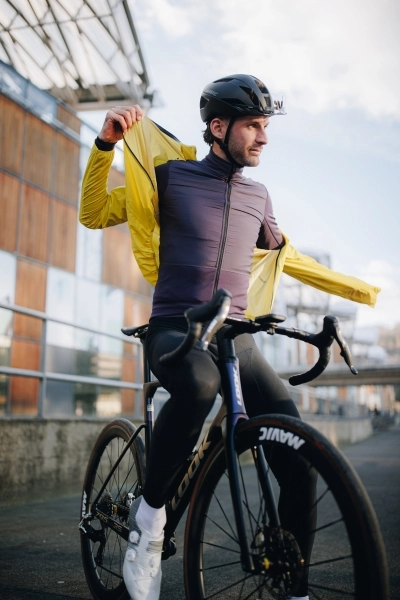
A winter road cycling jacket should be chosen based on the prevailing conditions during your rides: a thermal jacket blocks the cold wind and insulates your torso, whilst a rain jacket keeps the water out without providing insulation. Cold and bad weather shouldn’t dictate your ride: our Aksium Thermo Jacket effectively protects you from the cold wind thanks to a construction designed to shield you from winter conditions, featuring a 3-layer softshell on exposed areas, a 10K Schmerber membrane, a brushed inner lining and a breathable honeycomb fleece under the arms. On the road, your torso stays protected whilst your underarms wick away sweat at a rapid rate – the two essential requirements of a men’s road cycling jacket in the depths of winter.
When the rain gets heavier, the Cosmic H2O Jacket offers extreme waterproofing, rated at 20K water column, to keep you dry even when conditions become particularly challenging. Its Pertex® Shield fabric and waterproof two-way zip keep out water and wind, whilst its side pocket allows it to be packed down into itself before being stowed away.
Long winter cycling shorts for the road protect your leg muscles from the cold wind, and your extremities need separate protection: hands, feet and head are covered by none of the three layers. The Ksyrium Thermo Bib Tight long road shorts are built on a brushed Superroubaix® fabric and a 4-layer ErgoEndurance chamois with an Ortholite insert, rated for rides of 7 hours and more. Two criteria that set summer shorts apart from a pair of winter men’s cycling shorts.
Their outer water-repellent treatment repels splashes and light rain, without making the garment waterproof. Our guide to cycling shorts covers the choice of chamois in detail.
Almost invisible by day, essential once the light fades: our reflective details blend discreetly into the design of our garments, without taking anything away from their aesthetics. As the light drops, they take on their full importance in making you more visible on the road, such as the reflective prints on the thighs and calves of these long shorts.
Leg warmers and arm warmers make your kit adaptable when the day warms up, and gloves and overshoes for the cold, together with thermal socks, complete the protection of your extremities.
| Role in the outfit | Model | Key details | Price | Recommended use |
| Additional insulating layer | Ksyrium Thermo Vest thermal vest | Polartec® Alpha® insulation, windproof, water-repellent, packable | €149 | Autumn, spring, or under a jacket |
| Thermal protective layer | Aksium Thermo Jacket | 3-layer softshell, 10K Schmerber membrane, brushed inner lining, breathable fleece under the arms | €169 | Harsh winter conditions |
| Rain protection layer | Cosmic H2O Jacket | 20K waterproof Pertex® Shield fabric, two-way waterproof zip, packs down into its side pocket | €179 | For heavy rain, then as a windbreaker |
| Lower body | Ksyrium Thermo Bib Tight | Brushed Superroubaix®, 4-layer ErgoEndurance chamois, water-repellent, reflective strips on thighs and calves | €159 | Short days, long rides |
Choosing your winter road cycling kit comes down to building three coherent layers, then adjusting only the outer two to the conditions on the day: the base layer stays the same on every ride, the insulating layer follows how long the cold lasts, and the protective layer is chosen on the prevailing condition, cold wind or rain.
In the autumn-winter road clothing collection, invest first in the base layer and the long bib tights of your winter road cycling kit, then in the jacket suited to your prevailing weather.