€2,455.00

Choosing your carbon wheels for L'Étape du Tour 2027 starts with the climbing: from Cluses to Les Saisies, the passes come one after another and call for light carbon road wheels with a shallow, mid-depth or mixed-depth rim, stiff when you climb out of the saddle and stable on the descents. This guide sets out which rim depth to choose, what pair weight to aim for and which Mavic pair to pick for this route.
To choose your carbon wheels for L'Étape du Tour 2027, remember:
Before comparing carbon road bike wheels on rim depth, weight and climbing stiffness, start from what the passes on this route demand.
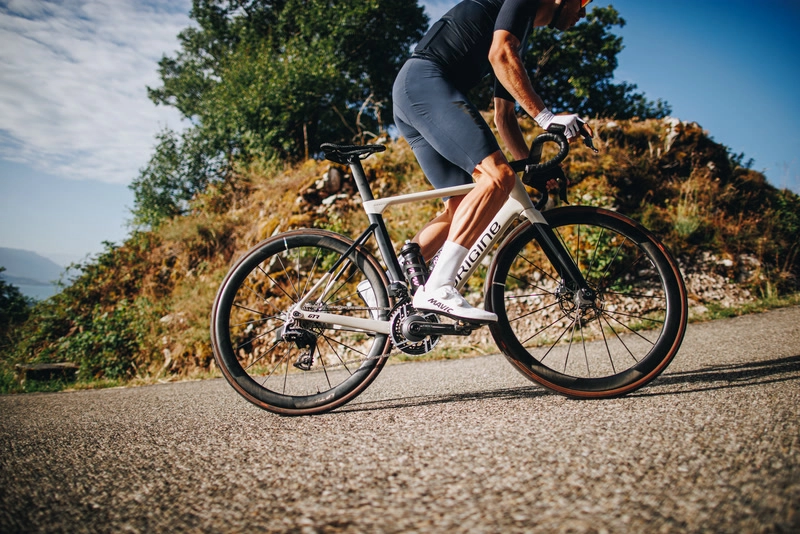
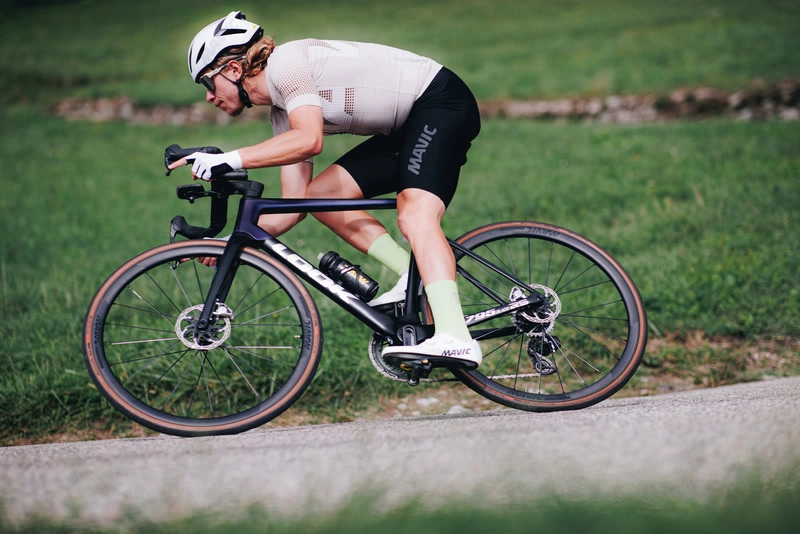
L'Étape du Tour 2027 is a mountain sportive: on 11 July 2027, it packs 154 km, 4,850 m of elevation gain and 5 major climbs between Cluses and Les Saisies. The L'Étape du Tour 2027 route tackles the Col de la Colombière from the very first kilometres, 15.9 km at 7%. It finishes with the Col du Pré, near Lake Roselend, then the Montée de Bisanne, 12.4 km at 8.3%, before a high-altitude finish at Les Saisies.
A route like this means long climbs, where the weight and stiffness of the pair count, then a descent after each pass, where stability and braking come first. A deep-section rim, designed to cut drag and hold momentum at high speed, offers less on long climbs, where the speed drops.
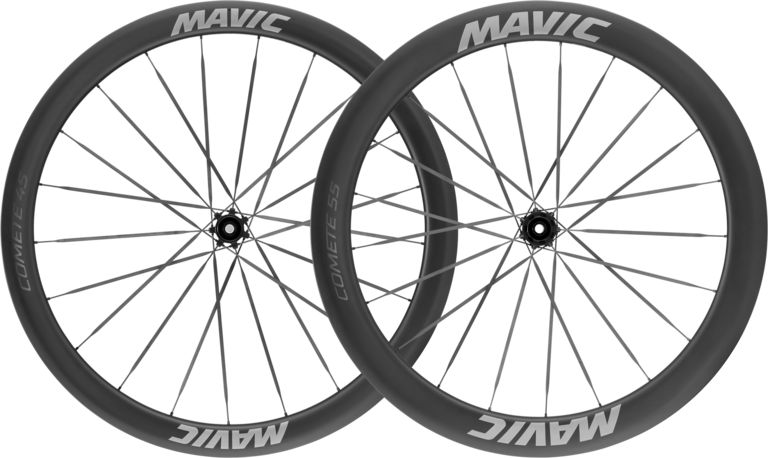
The Comete 45/55 aero wheels are designed for mountainous courses and big elevation gain, where long climbs, technical descents and changes of pace call for a light, manoeuvrable pair.
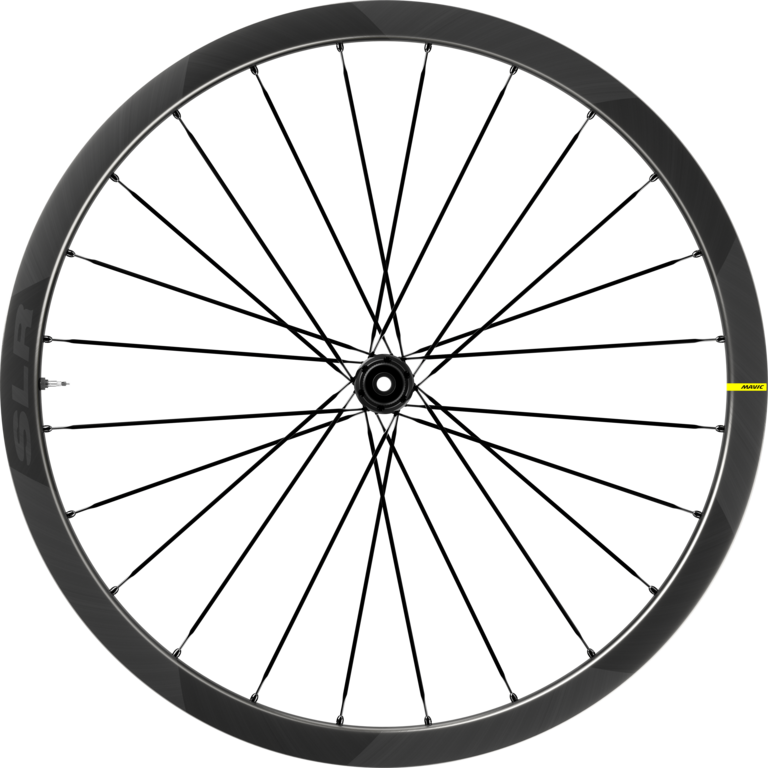
Carbon rim depth for climbing is chosen first for lightness and handling: the Cosmic SLR 32 carbon road wheels, with a 32 mm profile, are designed for the mountains. They are built to let you attack climbs and take corners with confidence. Their rim width is matched to the shallow profile: in crosswinds, the steering stays predictable.
The Cosmic SL 32 carbon road wheels have a 32 mm carbon rim, whose shape draws on NACA aerodynamic profiles to reduce drag. Their lighter rim keeps inertia down: in practice, you pick up speed quickly every time you accelerate.
The mixed-depth Comete 45/55 carbon road wheels pair a 45 mm front wheel, for lively steering, with a 55 mm rear wheel, for stability and cruising speed. The shallower front improves stability in crosswinds, an advantage on mountain descents.
Heïdi Gaugain won the Red Bull Cycling Survivor 2026, on 26 September at the Circuit de Charade, on Comete 45/55 wheels: her second consecutive win in the event.
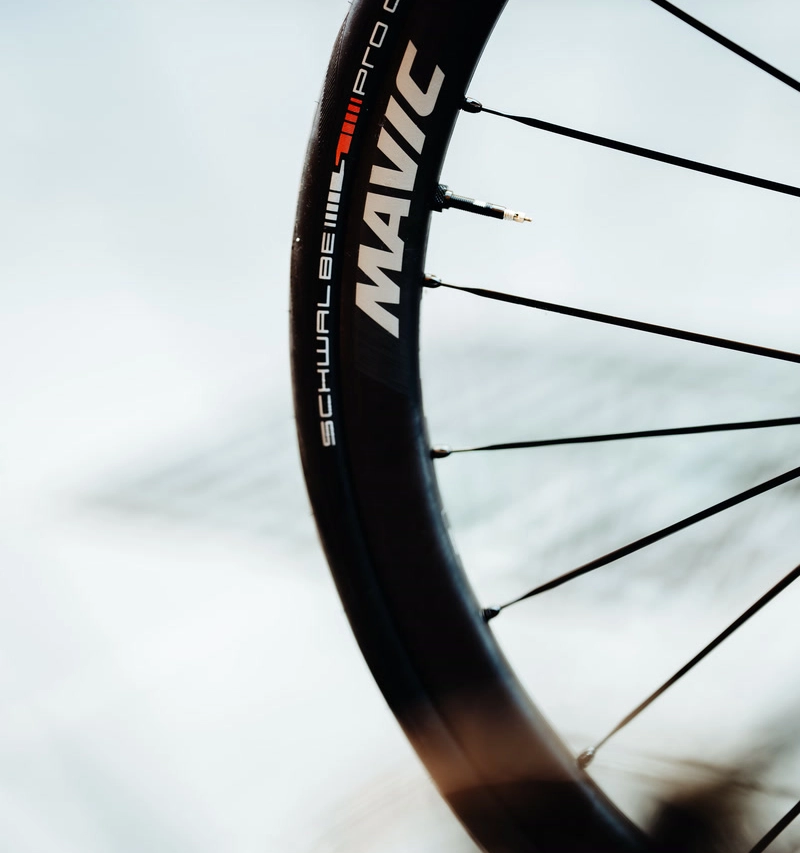
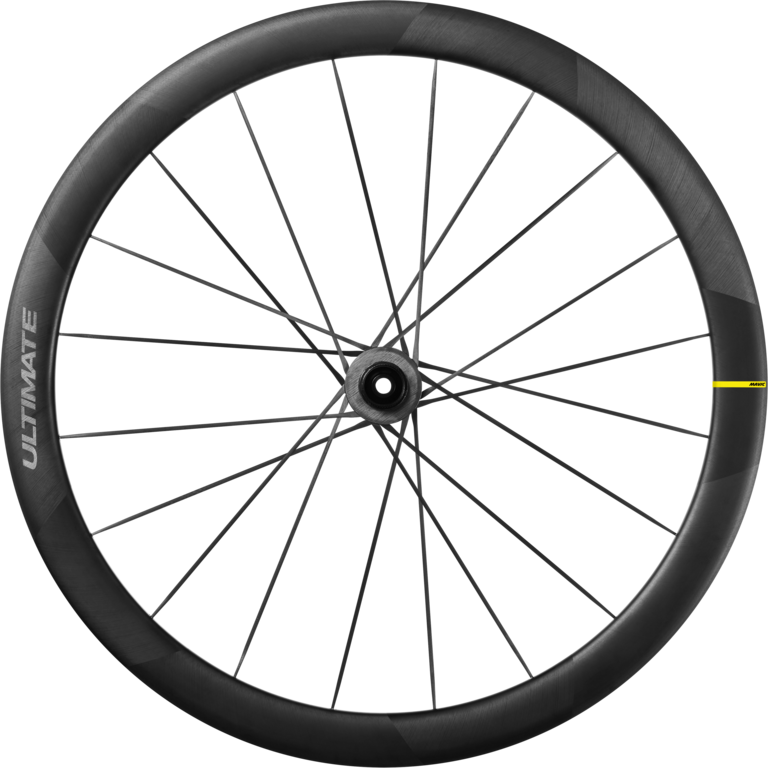
For climbing, the lightest pair in this selection is the Cosmic Ultimate 45 carbon road wheels, 235 g lighter than the Cosmic SL 32 carbon road wheels. On the Cosmic Ultimate 45 wheels, the Adaptive Layup carbon lay-up makes the rim lighter, for livelier wheels that are more enjoyable to ride uphill.
The ID360 freehub is fitted to every pair in the selection. On the Comete 45/55, Cosmic SLR 32 and Cosmic SL 32 carbon road wheels, its 40-tooth ratchet engages every 9°: on hairpin bends, the power goes down almost instantly every time you accelerate.
Lateral stiffness also matters when you climb out of the saddle: on the Comete 45/55 wheels, the 21 carbon spokes in each wheel improve it. On the Cosmic Ultimate 45 wheels, each one-piece R2R carbon spoke runs from one side of the rim to the other through the hub: the wheel stays stiff whether you are accelerating, braking or steering through a bend.
Mavic's wheel lab tests at Chavanod include a fatigue bench that simulates 500 km of continuous climbing out of the saddle, like a very long Alpine pass. Based on field measurements, this test combines lateral loads on the wheel and torsion on the rear hub.
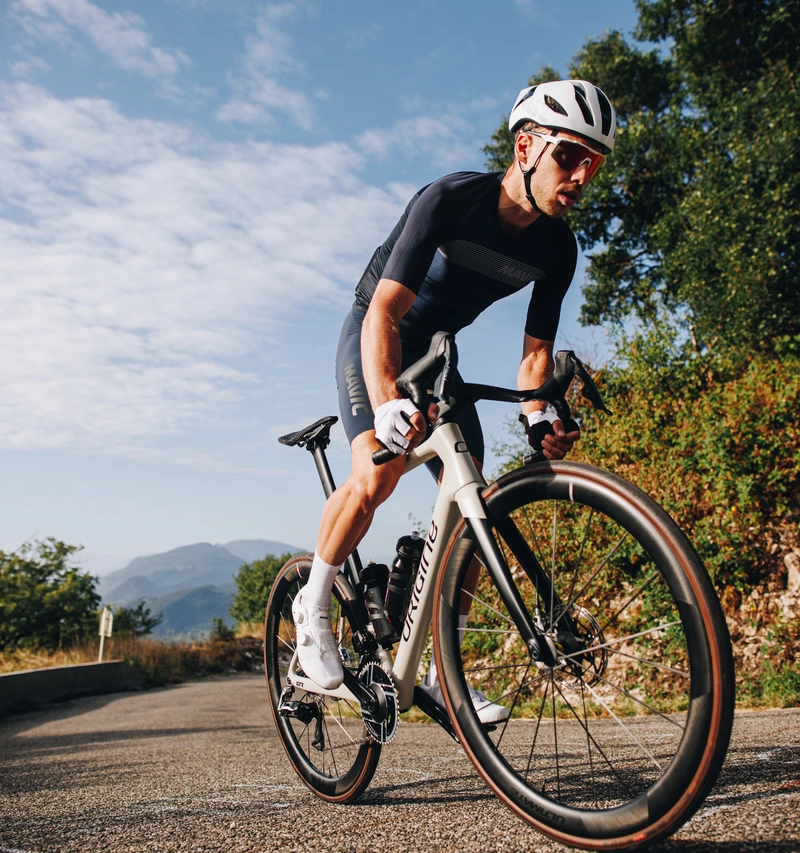
The five Comete and Cosmic pairs in this guide are all disc-brake wheels, cost from €1,299 to €4,399 and are eligible for the lifetime warranty.
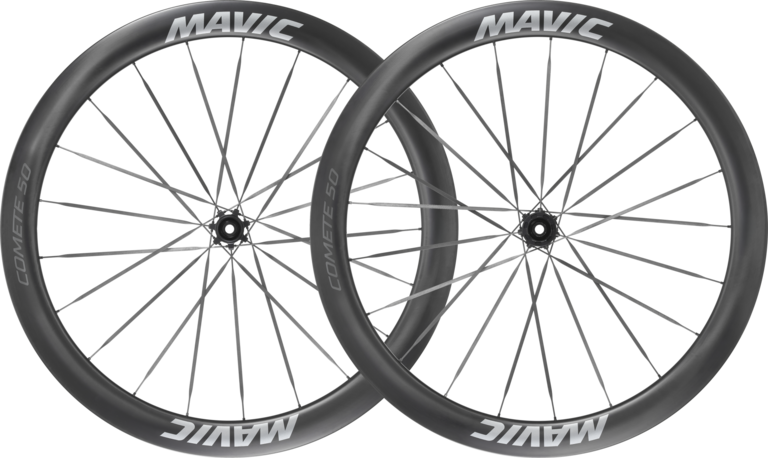
The Comete 50 carbon road wheels are designed for riders who want a single pair: fast on the flat, responsive on the climbs and precise in their line at high speed. Their 50 mm profile suits riders who prepare for the event on fast rides and want to keep the same wheels in July.
At the Tour de France Femmes avec Zwift 2026, the St Michel Preference Home Auber93 team rode two Mavic models, the Comete 50 wheels and the Cosmic SLR 45 carbon road wheels; Solène Muller crossed the summit of the Col de la Savine in 3rd place there, in the mountains classification of stage 3.
| Model | Rim depth | Internal width | Pair weight | Price | Recommended use |
| Cosmic Ultimate 45 carbon road wheels | 45 mm | 23 mm | 1,260 g | €4,399 | Lightest pair in the selection |
| Comete 50 carbon road wheels | 50 mm | 23 mm | 1,315 g | €2,499 | One pair, from the flat to the climbs |
| Comete 45/55 carbon road wheels | 45 mm front / 55 mm rear | 25 mm | 1,350 g | €2,499 | Mountainous courses, big elevation gain |
| Cosmic SLR 32 carbon road wheels | 32 mm | 21 mm | 1,390 g | €1,999 | Mountains, climbs and corners |
| Cosmic SL 32 carbon road wheels | 32 mm | 21 mm | 1,495 g | €1,299 | Mountain wheel, entry price for carbon |
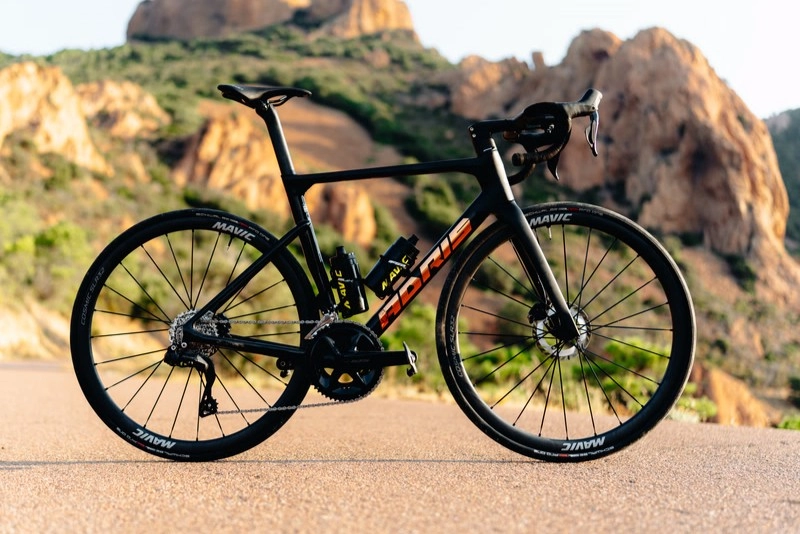
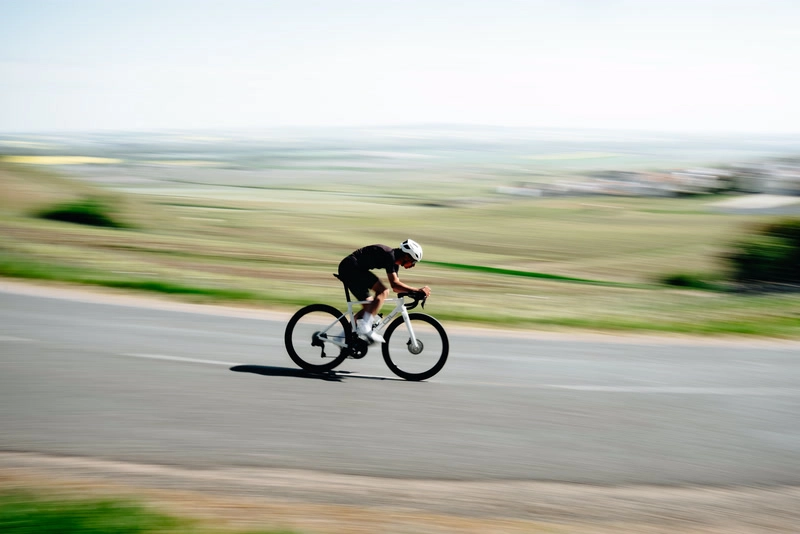
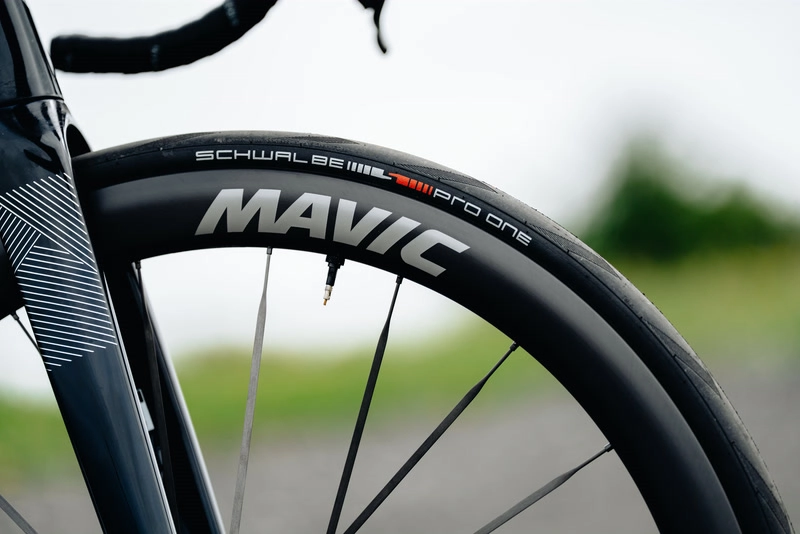
To choose your carbon wheels for L'Étape du Tour 2027, start from the 4,850 m of climbing: the best wheels for this route combine a light pair, a 32 to 50 mm rim or a mixed-depth profile, and good lateral stiffness out of the saddle. The mixed-depth profile of the Comete 45/55 carbon road wheels is designed for big elevation gain; if lightness is your priority, the Cosmic Ultimate 45 carbon road wheels are the lightest in the selection, at 1,260 g a pair.
On a tighter budget, the Cosmic SL 32 carbon road wheels give you a 32 mm profile for €1,299. The carbon road wheels range covers the other profiles. Further reading, on rim depth in triathlon: IRONMAN wheel set-up guide.