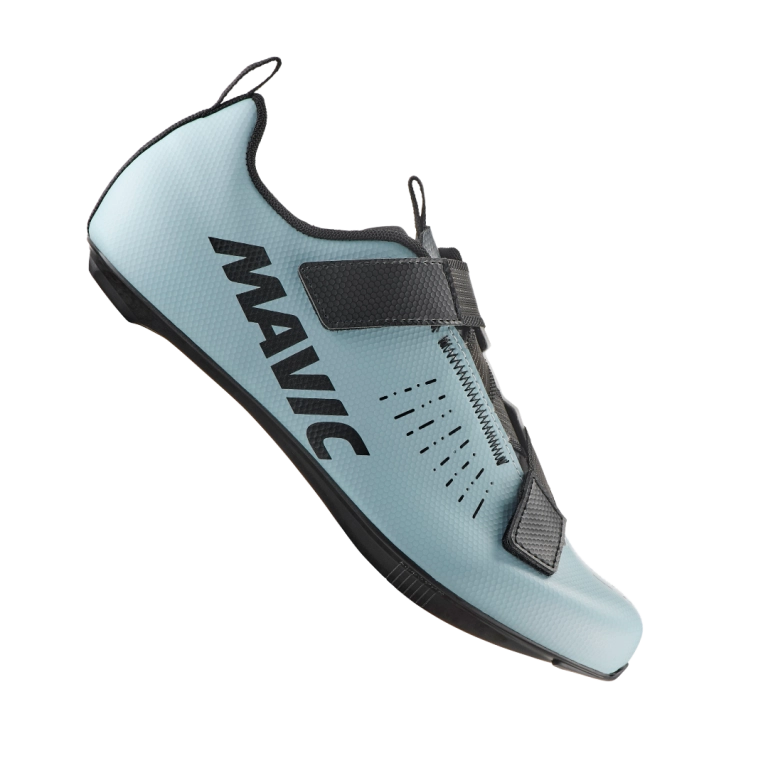
Road cycling shoes: how to choose the right pair
Categories
Road bike shoes are chosen on three things you can check before buying: the sole stiffness index, the closure system and how the foot is held. The Mavic road cycling shoes range covers all three, from a glass-fibre reinforced polyamide sole to a full carbon sole with ventilation openings, with a strap closure, a single dial or a double dial.
Which road bike shoes for which use:
- Long rides: polyamide and glass-fibre sole, stiffness index 50/100, strap or single dial.
- Structured training: carbon sole, energy transfer index 70, BOA® L6 dial and front velcro.
- Road racing: composite carbon sole, stiffness index 80/100, double BOA® L6 dial over two zones.
- Competition: full carbon sole with ventilation openings under the forefoot, double BOA® Li2 dial.
- Weight: 245 to 270 g per shoe in 8.5 UK across the road range.
What follows matches three ride profiles to three levels of sole and closure, then to the models that correspond to them.
Which ride profile for choosing your road shoes?
Your ride profile decides the choice of your road shoes more reliably than the price level: a very stiff sole brings nothing to five hours at a steady pace, and a flexible sole limits power transfer as soon as the accelerations come one after another.
Three profiles cover road riding, endurance, structured training and racing, and they match the three levels of stiffness in the range. If your routes regularly leave the tarmac, the Mavic gravel shoes follow the same logic with a lugged sole and SPD compatibility.
Endurance shoes: flexible sole and adjustable fastening
Endurance shoe: flexible sole and adjustable dial
An endurance shoe pairs a sole that keeps a little flex with a dial you can adjust while riding, for rides of 3 to 6 hours at a steady effort. The priority is consistency of feel, from the first kilometre to the last.
This endurance profile is yours if:
- your long rides come round every week;
- your effort stays constant rather than explosive;
- your routes mix flat roads and climbs, sometimes several passes;
- you are wary of hot spots and numbness late in the ride.
Upper volume then matters more than the sole index. The foot swells over the hours: a closure you can release by one click while riding avoids a pressure point. In winter, keep that volume available for a thick sock and an overshoe rather than going up a size, and our guide to cycling shorts covers the other source of discomfort on those rides.
Carbon sole and support for interval training
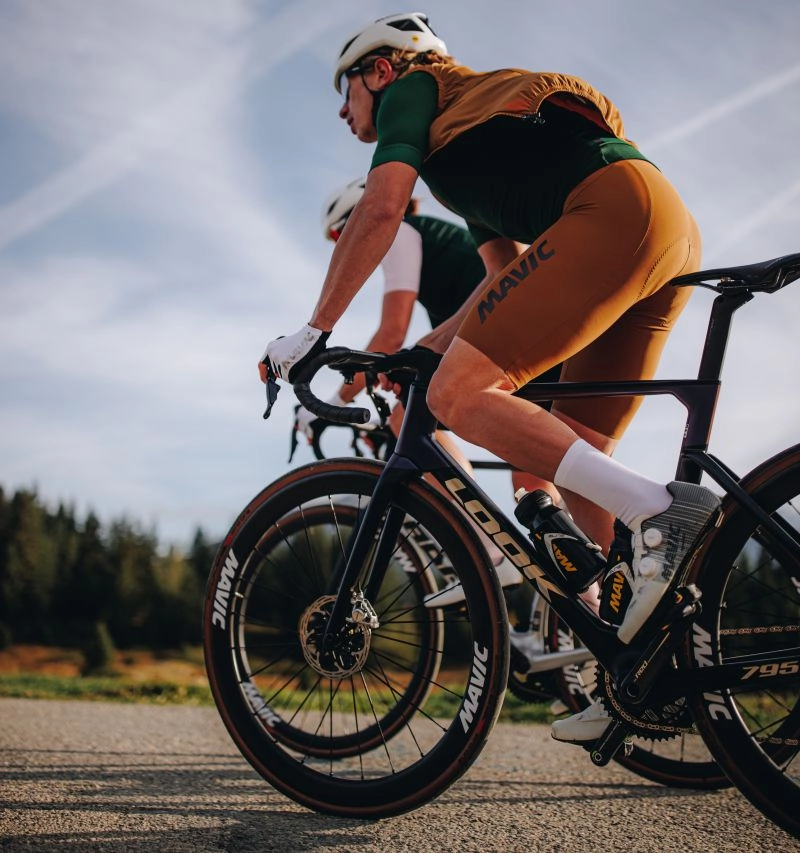
Carbon sole and heel hold for structured training
A carbon sole and a heel hold that does not give out of the saddle serve structured training, where accelerations and changes of pace follow one another on a sustained effort. The sole stabilises the pedal stroke, the multi-zone closure stops the foot working inside the shoe.
This structured training profile is yours if:
- your rides are often paced, in a club or to a plan;
- you accelerate frequently, out of corners and on short climbs;
- your cadence varies widely between efforts;
- you want a firmer, more direct pedalling feel.
The heel must stay in place, and the instep held without over-tightening. A micrometric dial provides that adjustment, and it can be replaced, as can the lace, with the spare parts for cycling shoes.
Racing shoes: rigid sole and stable upper
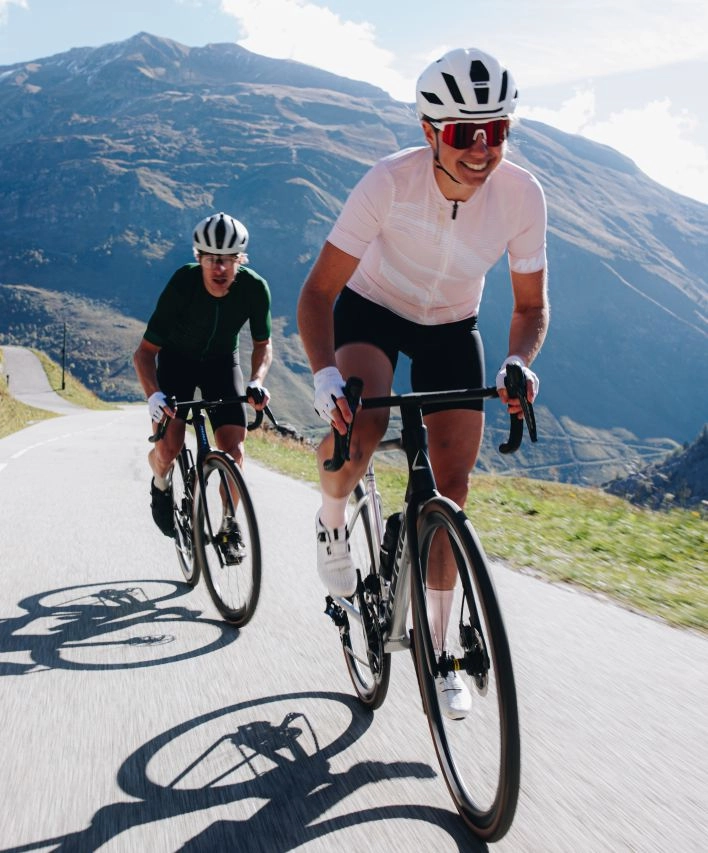
Racing shoe: stiff sole and low-stretch upper
A racing shoe is built on a stiff sole with a high index, which limits deformation under load, and on a low-stretch upper, which stops the foot moving as force increases. Both serve intense, repeated efforts, often above threshold.
This racing profile is yours if:
- you race, sprint or ride segments at maximum intensity;
- you are after the best transfer to the drivetrain;
- you want a locked-in foot and an immediate response when you accelerate;
- your routes string together fast flat sections and hard accelerations.
Ventilation becomes a performance criterion at this level, since a foot that stays cool keeps a consistent feel. For a timed use with a transition, the Mavic triathlon shoes add a closure designed for quick entry.
Cleat position matters as much as the shoe: a cleat set back a few millimetres from the ball of the foot stabilises the pedal stroke on long efforts, while a cleat further forward favours a high cadence.
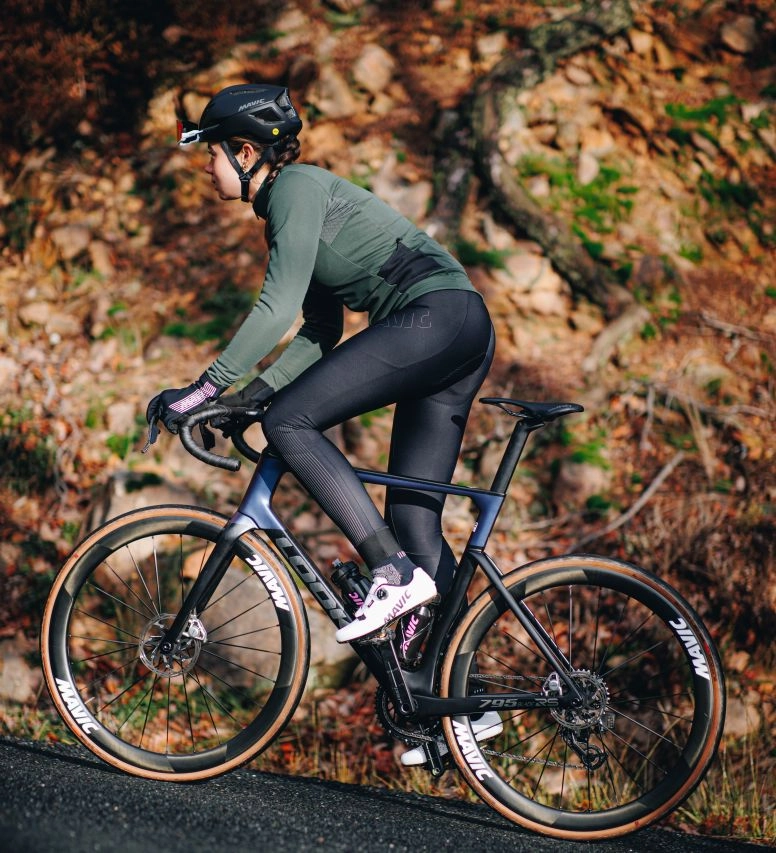
Which road shoe model for your profile
Each profile matches one or two models in the road range, which differ in their sole index, their closure and their weight.
| Model | Closure | Sole and index | Weight per shoe | Price | Recommended use |
| Aksium Strap road shoes | M-shaped strap, heel loop | cushioning PU, generous fit | 245 g | €119 | long rides, quick entry |
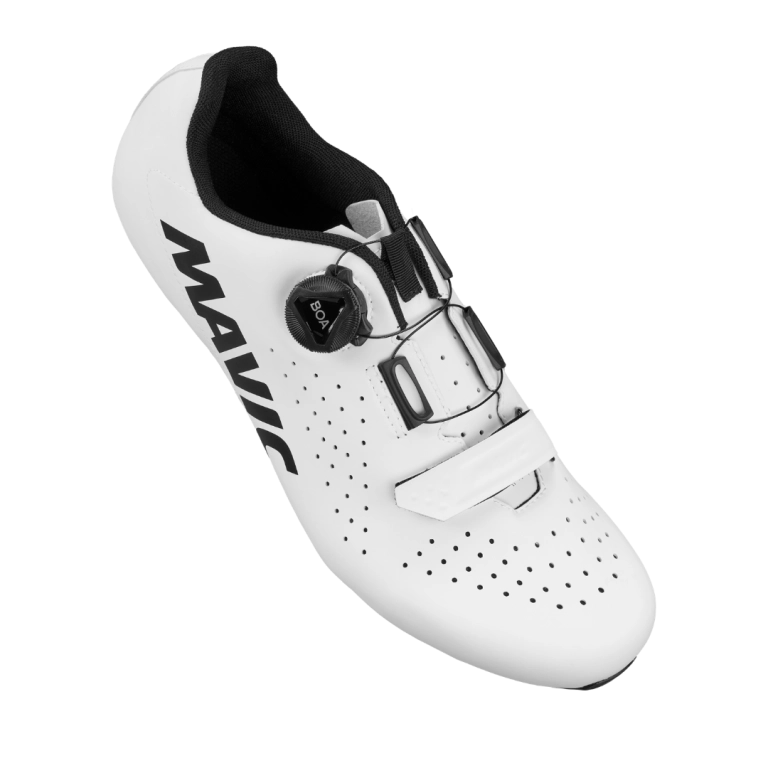
| Cosmic BOA road shoes | BOA® dial | glass-fibre reinforced polyamide, index 50/100 | 250 g | €149 | endurance, fine adjustment while riding |
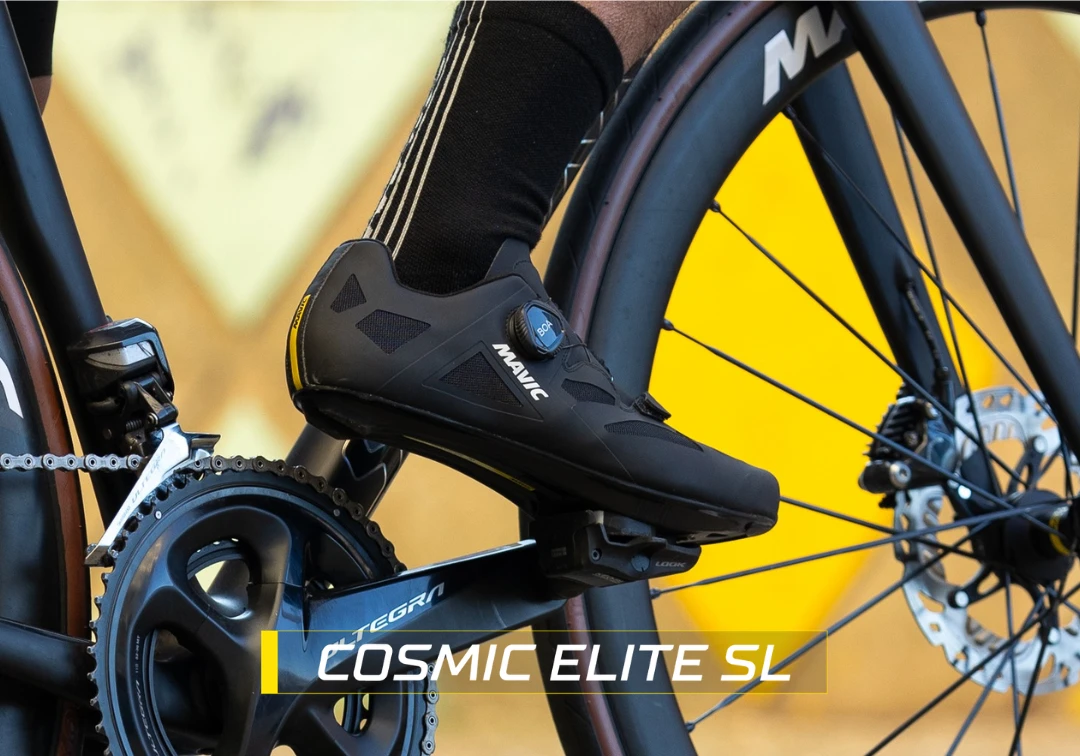
| Cosmic Elite SL road shoes | BOA® L6 and front velcro | carbon, energy transfer index 70 | 255 g | €189 | structured training, hot weather |
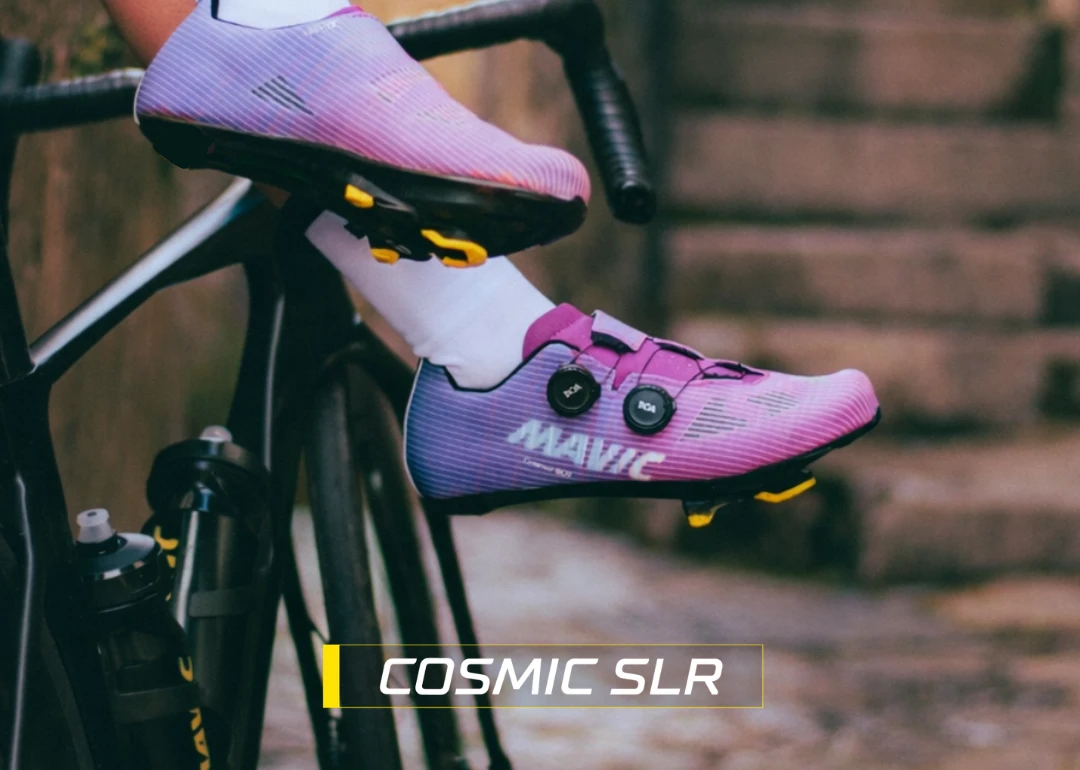
| Cosmic SLR road shoes | double BOA® L6, two zones | composite carbon, index 80/100 | 270 g | €249 | racing and intensive training |
Endurance shoes: Aksium Strap and Cosmic BOA
The two endurance shoes in the range differ in how finely they adjust. The Aksium Strap road shoes are built around an M-shaped strap that supports the instep and the forefoot along the whole upper, with a cushioning PU and a generous fit: 245 g per shoe, and immediate entry through the heel loop. The Cosmic BOA road shoes add micro-adjustment, which can be set while riding, with a glass-fibre reinforced polyamide sole of index 50/100 and an Italian synthetic leather upper, for 250 g and €149.
Training shoe: Cosmic Elite SL
The Cosmic Elite SL road shoes are the training shoe of the range, with hold from two systems and a carbon sole. The BOA® L6 dial handles the overall closure, the front velcro refines the hold of the forefoot, and the anatomical overlap construction wraps the foot without stifling it. The energy transfer index of 70 stays below the racing models, but is enough to stabilise the pedal stroke in accelerations. The TPU upper, pierced with mesh panels, releases heat, and the memory foam insole filters vibration. Made in Europe, 255 g, €189.
Racing shoes: Cosmic SLR and Ultimate IV
The two racing shoes in the range share a Matryx® upper and a carbon sole. The Cosmic SLR road shoes combine a double BOA® L6 closure over two zones with a composite carbon sole of index 80/100: the two dials adjust the forefoot and the instep separately, which avoids over-tightening the whole shoe to hold the heel, and the front sole vents ventilate as the temperature rises, for 270 g and €249. The 3-bolt road fitting, Look and SPD-SL type, secures the pedal stroke.
Above that, the Cosmic Ultimate IV road shoes target competition, with a Matryx® upper in Kevlar and polyamide yarns of very low elongation, a carbon sole with openings under the forefoot and a double BOA® Li2 dial, for 245 g.
Choosing your road bike shoes
Choosing road bike shoes means starting from the length and the intensity of your rides, then checking three figures on the product page: the sole index, the closure type and the weight. An index of 50/100 with a simple closure covers endurance, an index of 70 with a double system covers structured training, an index of 80/100 with a double dial covers racing.
The rest comes down to fitting, with the sock you actually ride in. The Mavic road shoe range runs from €119 to €249, with sole stiffness rising at each level.
FAQ: choosing your road cycling shoes
News & advice
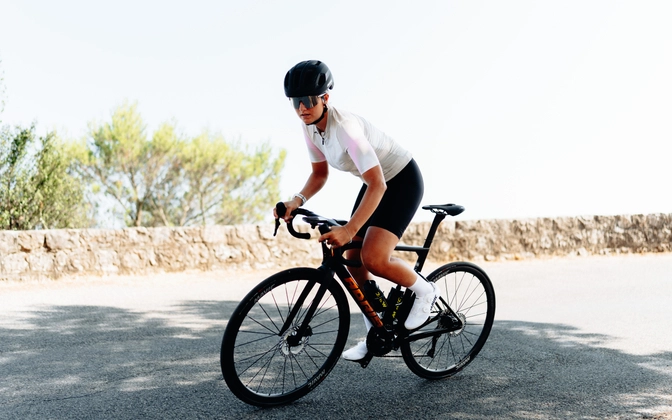
Nov 12, 2026Choosing women's bike shorts: the Mavic guide Eight Mavic women's shorts and tights, from XS to XL, with an ErgoEssential or ErgoContact Women chamois pad, in short, 3/4 knicker or long format.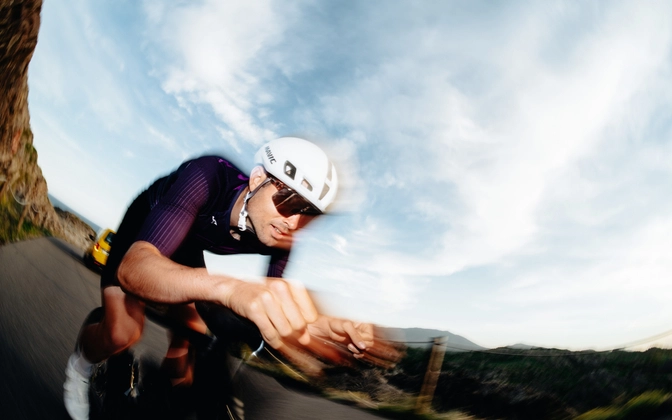
Nov 10, 2026Aero vs vented helmet: which one for the road? Wind tunnel gains, airflow, weight and protection: how to choose between an aero and a vented helmet, with the Comete Ultimate, Comete SL and Aksium road helmets.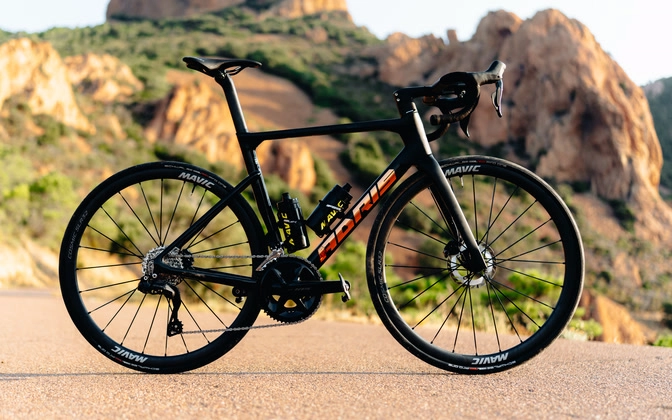
Oct 22, 2026What are the best carbon wheels for the 2027 Étape du Tour? Colombière, Col du Pré, Bisanne: the 4,850 m of climbing at L'Étape du Tour 2027 point to light carbon wheels such as the Comete 45/55 and Cosmic SLR 32 carbon road wheels.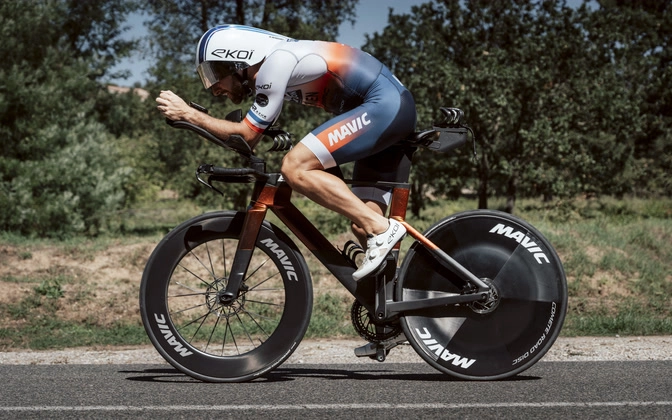
Oct 16, 2026IRONMAN wheel set-up: disc, rim depth and crosswinds Disc rules, rear wheel options and front rim depth for windy days: Dylan Magnien, winner of IRONMAN Lanzarote 2025, talks through his Comete wheel choices.