Road

Road Bike Shoes - Put your pedal to the metal


RecommendedSort By

These product categories might interest you
Cyclists demand functionality, comfort and ease of maintenance from their road cycling shoes. Other factors to consider are compatibility with different pedal cleat systems, the rigidity of the sole, ventilation and durability. Cyclists also prioritize fit, performance and durability when justifying the higher purchase price of premium models.
FAQ

The stiffer the sole, the more stable the pedal contact and the more direct the power transfer.

Carbon soles are designed for performance, composite soles offer a good balance, and nylon/fiberglass soles remain effective with a welcome degree of flexibility for endurance riding.

  • Measure your foot at the end of the day, when it’s slightly larger; if not, add 0.5 cm and refer to the size guide.
  • The shoe should hold your heel in place without letting it move, while leaving a little room for your toes. 
  • Once laced up, you shouldn’t feel any pressure points on the top of your foot.
  • If you’re unsure, choose the option that avoids pressure points and allows for precise adjustment.

After a ride in wet conditions, let them air dry away from any heat sources.
Clean the upper (everything above the sole) with a damp cloth and mild soap if necessary.
Check the wear on the heel pads and the condition of the lacing systems: these are what determine the fit and lifespan.

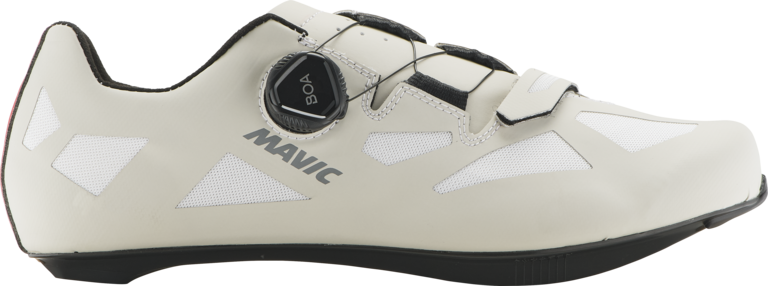
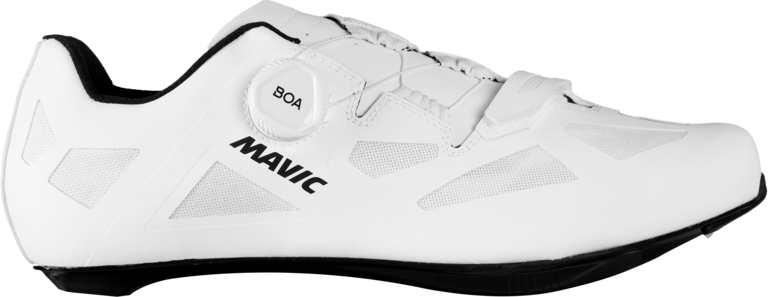
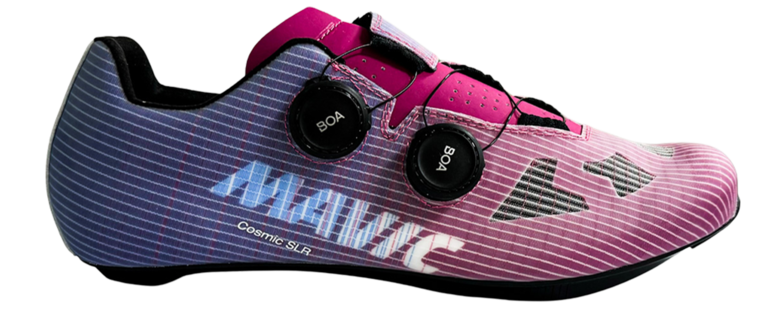
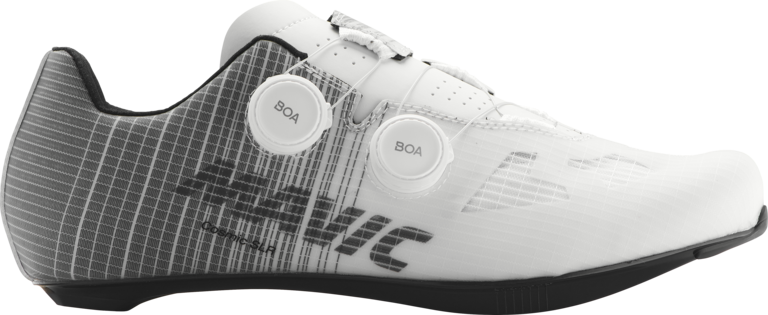
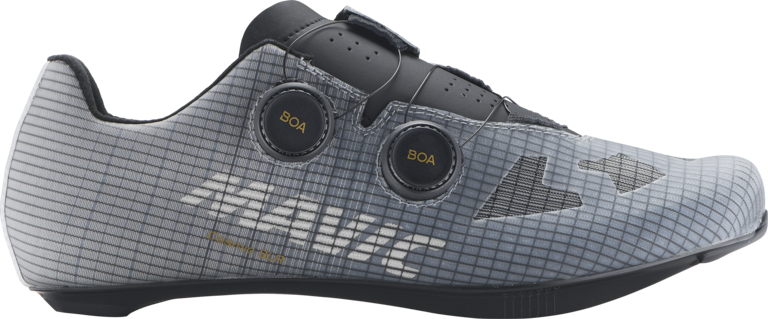
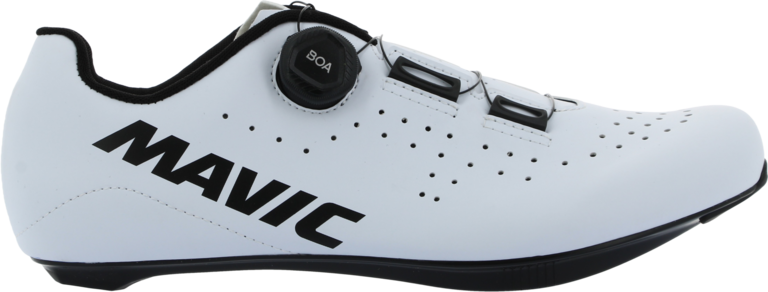
The best road cycling shoes for professional cyclists offer the perfect combination of lightness, stiffness and comfort. The key features to look for are a carbon sole for optimal power transmission and an efficient, fast and precise fastening system. Top options include the BOA Fit System®, which provides  micro-adjustability for a finely-tuned fit, and the Velcro® strap closure system.  All road cycling shoes should feature good ventilation to prevent overheating.


To care for and clean your road cycling shoes, start by removing the insoles and laces, then use a soft brush to remove dirt and debris. If the shoes are very dirty, you can hand wash them with warm water and mild soap. Avoid using harsh chemicals that could damage the materials. After cleaning, leave them to dry in the open air, away from any source of direct heat. Once dry, you can apply a waterproofing spray to protect the shoes from moisture and extend their life.


Straps and Velcro are simple and reliable. BOA® allows for fine micro-adjustment and, depending on the model, zone-specific adjustment (forefoot/midfoot) to better distribute pressure.

On long rides, the ability to adjust the fit while riding is a real plus, as your feet change shape as they warm up.

Most road shoes use 3-bolt cleats (such as Look or SPD-SL), which is the case with Mavic shoes.
There are models with specific mounting holes depending on their intended use (which is not the case with Mavic).
Before purchasing, check the compatibility listed on the product page for both the shoe and your pedals.

Start with the right size and even tightness: tightening the front of the foot too much quickly creates a pressure point.

Next, adjust the position of the cleats and make sure the insole fits you properly.

In hot conditions, a breathable upper and underfoot ventilation significantly improve comfort.