
Cross-Country Mountain Bike Wheels

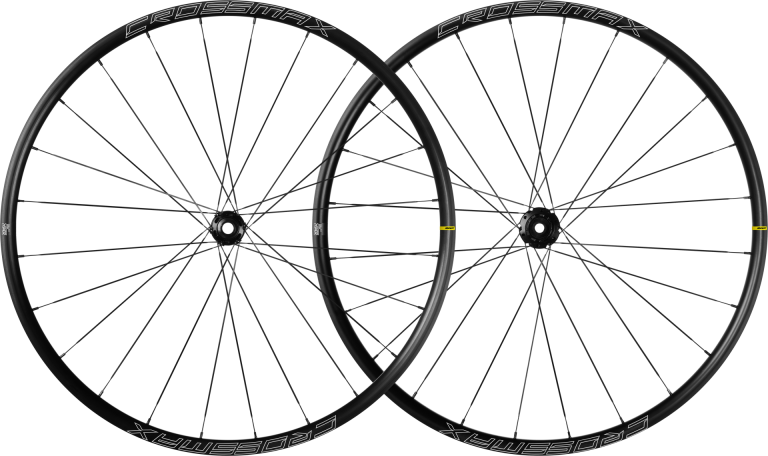
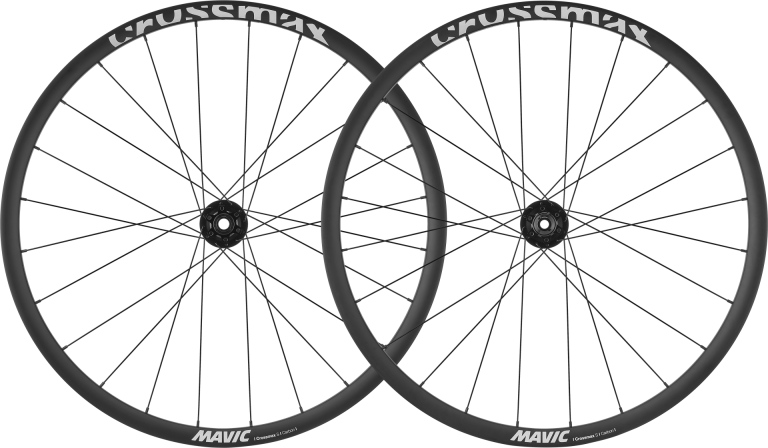
Mavic Crossmax XC mountain bike wheels: performance, precision, reliability

Today's XC is no longer just an exercise in endurance: it's a discipline that demands wheels that are responsive when accelerating, stiff when braking,...


RecommendedSort By

Internal width: 25 mm in aluminum, 30 mm in carbon — for modern XC tires

Internal width directly influences tire shape and stability. Wider rims provide more support for the tire at the correct pressure, improving control and precision when leaning, especially on rough terrain.

  • Crossmax aluminum: 25 mm internal for a balance of performance and control.
  • Crossmax Carbon SL Ultimate: 30 mm internal to maximize support, confidence, and stability at high intensity.

Aluminum Crossmax (29 & 27.5): everyday efficiency, race-ready

On Crossmax aluminum models, the Maxtal rim is designed to withstand modern XC use with an excellent weight/strength ratio. The rim is SUP welded for a strong, consistent joint, and the asymmetry helps achieve a more consistent tension—a key factor in long-term durability.You'll also find UST tubeless (for more control) and Infinity hubs combined with QRM Auto bearings for consistency.

Crossmax SL S: racing optimization (ISM4D + FORE)

When you're aiming for the clock, every detail counts. ISM4D intelligently optimizes the rim material: removing it where it's not needed and keeping it where it's needed. FORE technology is a real workshop advantage: it contributes to a cleaner tubeless assembly and can also facilitate spoke repair without dismantling everything (depending on the configuration), with a "race-ready" maintenance approach.

Crossmax Carbon SL Ultimate: UD carbon, 30 mm internal, adaptive layup

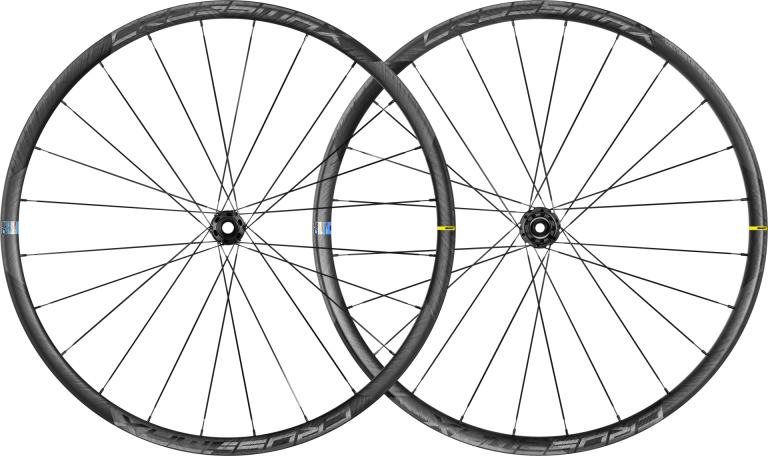
On the Crossmax Carbon SL Ultimate, we switch to a UD carbon rim, with 30 mm internal width and a 25 mm profile: the goal is clear—stability under load, precision at high speed, and efficiency on accelerations. Some tests of XC carbon wheels clearly illustrate this combination of "internal width and profile" around similar values (internal width ~27–30 and depth ~25) as having become very common on high-performance XC wheels.Adaptive Layup is used to fine-tune the stiffness/strength compromise, resulting in a wheel that responds quickly without becoming "brittle" on the trail.

Hubs: engagement and reliability

In XC, engagement and fluidity are noticeable on accelerations and technical climbs. Buying guides emphasize the importance of a responsive and reliable hub, especially when riding becomes more demanding. Depending on the model, you'll find Infinity (stiffness/efficiency) and ID360 (quick engagement), always with Mavic's goal in mind: to transform your watts into speed, with race-level consistency.
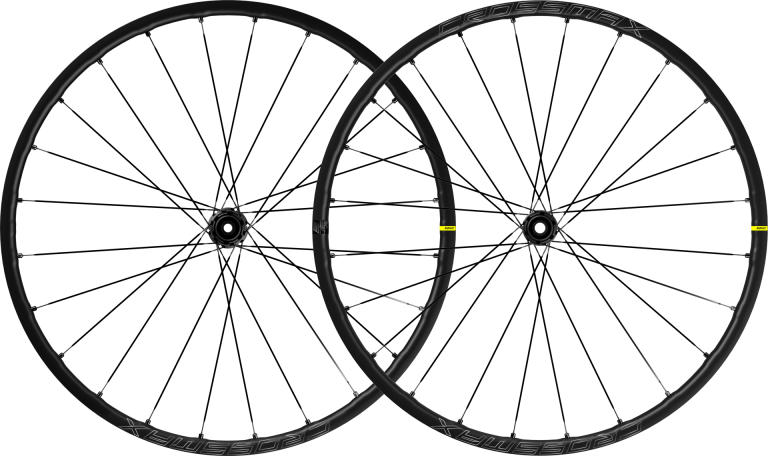
In modern XC, a high-performance wheel must do three things: respond to acceleration, maintain a clean trajectory on technical terrain, and remain stable when the ground is bumpy. The questions we hear most often in the workshop concern the choice between 25 and 30 mm internal width, 29 vs. 27.5, tubeless pressures, spoke tension, and hub/bearing maintenance. Here are our Mavic mechanic's guidelines for riding fast... and trouble-free.
FAQ

25 mm (Crossmax aluminum): excellent balance between performance and weight, good tire grip, versatile.
30 mm (Crossmax Carbon SL Ultimate): more lateral support for modern tires (2.25–2.4), better stability when leaning and at low pressure.
Workshop tip: the wider the rim, the more you can take advantage of a "generous" tire without feeling vague in corners.

 
The choice of wheel diameter depends largely on riding style and the rider’s body type. 29-inch wheels offer better climbing ability and better momentum retention, making them ideal for rough terrain and long distances. On the other hand, 27.5-inch wheels are more maneuverable and responsive, preferred by those looking for a more dynamic riding experience.
 
Tubeless systems are popular in XC because they reduce the risk of pinch flats, allow you to ride at lower pressures, which improves traction, and can be slightly lighter than traditional setups. The absence of an inner tube reduces the risk of a tire bursting in the event of a puncture, which increases reliability during races or long outings.

Mechanical method:

  • First, set the section + internal width, then adjust according to your weight/terrain.
  • Lower the pressure until you have grip without blurring when leaning and without bottoming out.
    Safety rule: always follow the recommended tire + rim pressures (never exceed the lowest limit).

FORE (Crossmax SL S): cleaner/more reliable assembly and workshop advantage: access to spokes from the outside → simpler, faster intervention, often without "major disassembly."
In racing, the real benefit is: easier maintenance and a consistent system.

SUP welding improves the evenness of the rim joint and its durability over time.
Workshop tip: a more uniform rim often means a wheel that performs better (fewer micro-changes in warping/jumping).

No: the goal is to optimize the "useful" material.
Workshop tip: in XC, save weight where it doesn't weaken the structure = a livelier wheel when accelerating, without compromising on durability.

Simple signs:

  • Intermittent disc rubbing
  • A "fuzzy" feeling when pressing down
  • A "ping" noise from the spokes after an impact
    Workshop tip: if you true the wheel and the problem returns, it is rarely "bad luck" → it is often due to uneven tension. This is what needs to be corrected.
  • Infinity: very stable base for performance, focused on rigidity/efficiency, consistent complete wheel.
  • ID360 (Carbon SL Ultimate): quick engagement, direct feel when accelerating out of a turn or over a step.
    Workshop advice: both are high-performance; what makes the difference in the long term is maintenance (cleanliness, lubrication, no high-pressure cleaning).

QRM Auto is designed to maintain clean rotation and limit play with automatic adjustment.
Monitor:

  • lateral play (clack)
  • rough rotation
  • abnormal noise
    Workshop tip: avoid high-pressure jets, rinse gently, dry, and check regularly if you drive in mud/dust.

Tubeless plug + tool, pump (or cartridge), a spare inner tube, multi-tool, chain tool + quick link. The best "repair" is still to check your tires/pressure before the race.

Tubeless tires are often preferred for XC because they allow you to ride with a pressure that is better suited to the terrain and greatly reduces the number of "classic" punctures.
Workshop tip: tubeless tires just require a routine maintenance schedule (preventive renewal, leak checks), but in both racing and training, they are very cost-effective.


What are the real benefits of aluminum versus carbon wheels in XC?
Carbon often provides greater responsiveness and precision under high-intensity pressure, especially with a wider internal width. Aluminum remains an excellent choice for its robustness and practicality.

Workshop tip: the biggest gains are often made with tires/pressure... then wheels.