Road Cycling Shoes: How to Choose the Right Pair
Categories
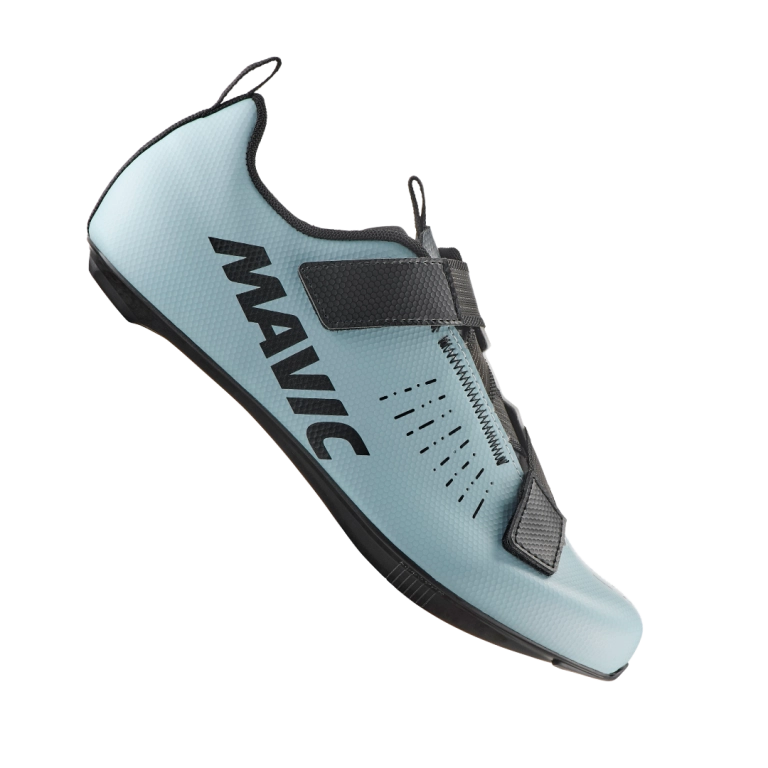
When choosing a road cycling shoe, consider three key factors you can check before buying: sole stiffness, the closure system, and foot support. The Mavic road cycling shoes offers a variety of options across these three categories, ranging from polyamide and fiberglass soles to fully ventilated carbon soles, with strap, dial, or dual-dial closure systems.
Which road cycling shoe for which use:
- Long rides: polyamide and fiberglass sole, stiffness rating 50/100, strap or single dial closure.
- High-intensity training: carbon sole, energy transfer index 70, BOA® L6 dial and front Velcro strap.
- Road running: carbon composite sole, stiffness rating 80/100, dual BOA® L6 dials in two zones.
- Competition: full carbon sole with ventilation openings under the forefoot, dual BOA® Li2 dials.
- Weight: 245 to 270 g per shoe in UK size 8.5 across the road line.
The following section pairs three riding profiles with three levels of sole and lacing, then matches them to the corresponding models.
Which riding profile should you choose for your road shoes?
Your riding profile determines your choice of road shoes more reliably than the product line: a very stiff sole offers no benefit during five hours of steady-paced riding, and a flexible sole limits power transfer as soon as you start stringing together accelerations.
Three riding profiles cover road cycling—endurance, interval training, and racing—and they correspond to the three levels of stiffness in the lineup. If your rides regularly take you off the pavement, the Mavic gravel shoes follow the same design philosophy with a knobby sole and SPD compatibility.
Endurance shoe: flexible sole and adjustable lacing
An endurance shoe combines a sole that retains a slight flex with a closure system you can adjust while riding, for rides lasting 3 to 6 hours at a steady pace. The priority is a consistent feel, from the first kilometer to the last.
This endurance profile is right for you if:
- you go on long rides every week;
- your effort remains steady rather than explosive;
- your routes combine flat terrain and hills, sometimes including several mountain passes;
- you’re concerned about muscle soreness and numbness toward the end of your ride.
The shank volume is more important than the sole index in this case. Your feet swell over time: being able to loosen the laces by one notch while riding prevents pressure points. In winter, keep this extra space available for thick socks and shoe covers, rather than going up a size, and our guide to cycling shorts addresses the other source of discomfort on these rides.
Carbon sole and support for interval training
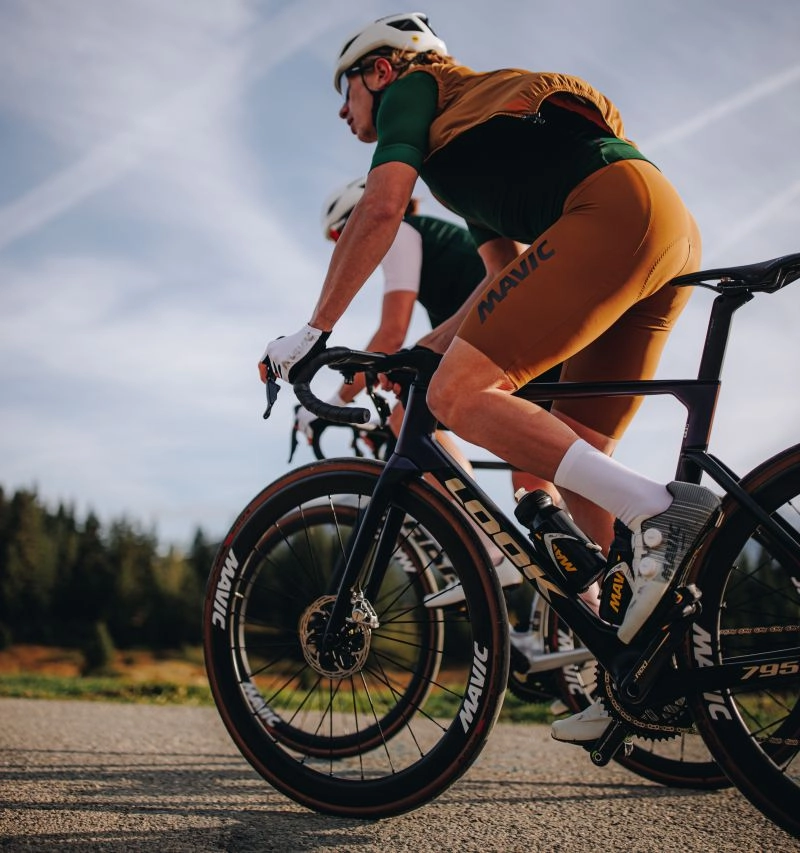
A carbon sole and multi-zone support are ideal for interval training, where accelerations and changes in pace follow one another during sustained effort. The sole stabilizes your footing, while the multi-zone compression prevents your foot from shifting inside the shoe.
This high-intensity training profile is right for you if:
- your rides are often rhythm-based, whether with a club or during scheduled sessions;
- you frequently accelerate, at pace markers and on short hills;
- your cadence varies significantly depending on the effort;
- you’re looking for a firmer, more direct pedaling feel.
Your heel should stay in place when out of the saddle, and the instep should be held securely without being too tight. A micrometric dial provides this adjustment, and it can be replaced—just like the lace—with spare parts for cycling shoes.
Road cycling shoe: stiff sole and stable upper
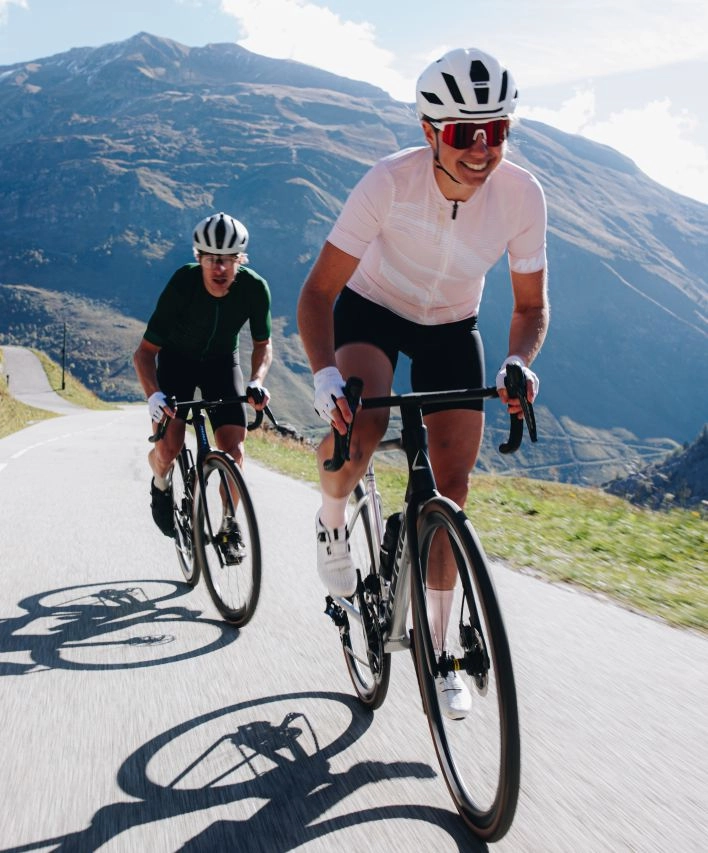
A racing shoe features a stiff sole with a high stiffness rating, which limits deformation under load, and an upper with low stretch, which prevents the foot from moving as force increases. Both features are designed for intense, repeated efforts, often beyond the threshold.
This running profile is right for you if:
- you compete in races, sprints, or segments at maximum intensity;
- you’re aiming for the best power transfer to the drivetrain;
- you want a locked-in foot and an immediate response to acceleration;
- your rides alternate between fast flat sections and hard accelerations.
At this level, ventilation becomes a key performance factor—a cool foot maintains a consistent feel. For timed events with transitions, the Mavic triathlon shoes feature a closure system designed for quick on/off.
The position of the cleat is just as important as the shoe itself: a cleat set back a few millimeters from the center of the metatarsal stabilizes your footing during long rides, while a forward-set cleat promotes speed.
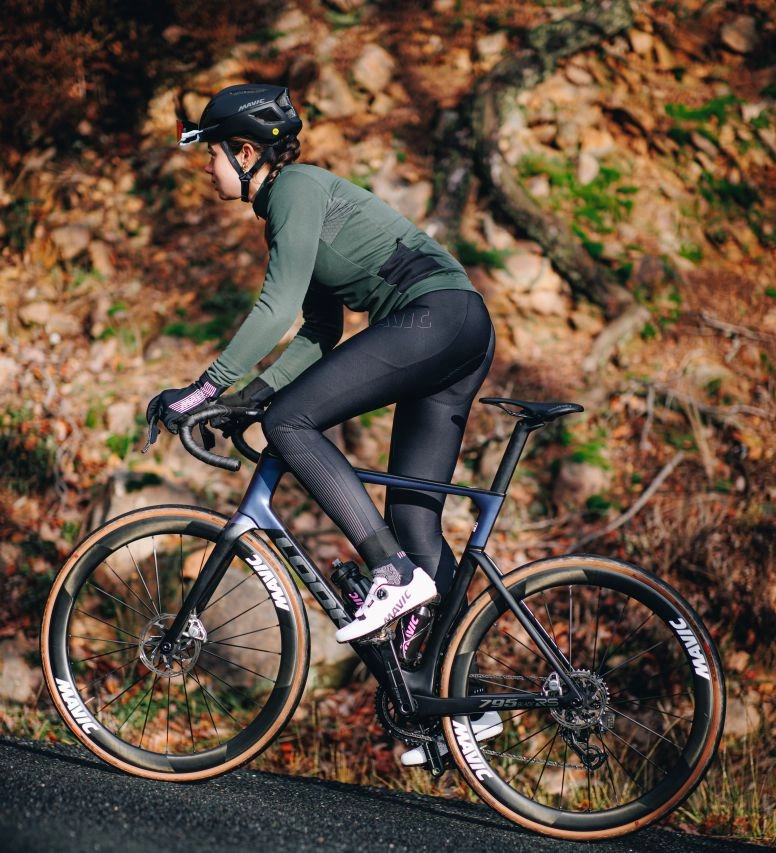
Which road shoe model is right for your profile
Each profile corresponds to one or two models of road shoes, which differ in their sole index, lacing system, and weight.
| Model | Lacing | Sole and rating | Weight per shoe | Price | Recommended Use |
| Aksium Strap road shoes | M-shaped strap, rear buckle | Cushioned PU, roomy fit | 245g | 119€ | long rides, quick to put on |
| Cosmic BOA road shoes | BOA® dial | glass-fiber-reinforced polyamide, 50/100 rating | 250g | 149€ | endurance, fine-tuning while riding |
| Cosmic Elite SL road shoes | BOA® L6 and front Velcro | carbon, energy transfer index 70 | 255g | 189€ | high-intensity training, hot weather |
| Cosmic SLR road shoes | Dual BOA® L6, two zones | Carbon composite, stiffness rating 80/100 | 270 g | €249 | racing and intense training |
Endurance Shoes: Aksium Strap and Cosmic BOA
The two endurance shoes in the lineup stand out for their precise fit adjustment. The Aksium Strap road shoes feature an M-shaped strap that supports the instep and forefoot along the entire length of the upper, with shock-absorbing PU and a roomy fit: 245g per shoe, and a quick-entry system via the rear buckle. The Cosmic BOA road shoes add micro-adjustment, adjustable while riding, with a 50/100-index fiberglass-reinforced polyamide sole and an Italian synthetic leather upper, weighing 250g and priced at €149.
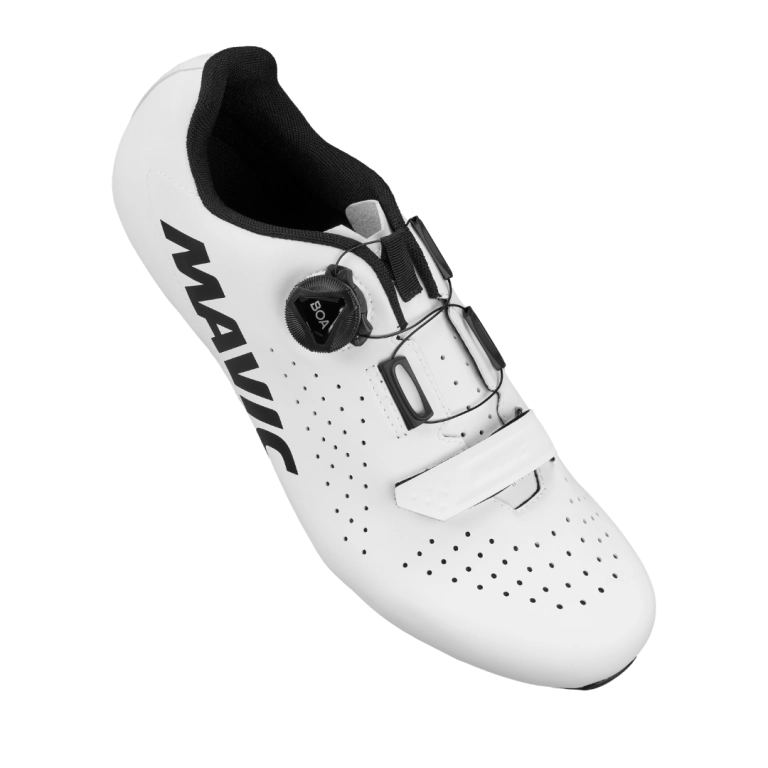
Training Shoe: Cosmic Elite SL
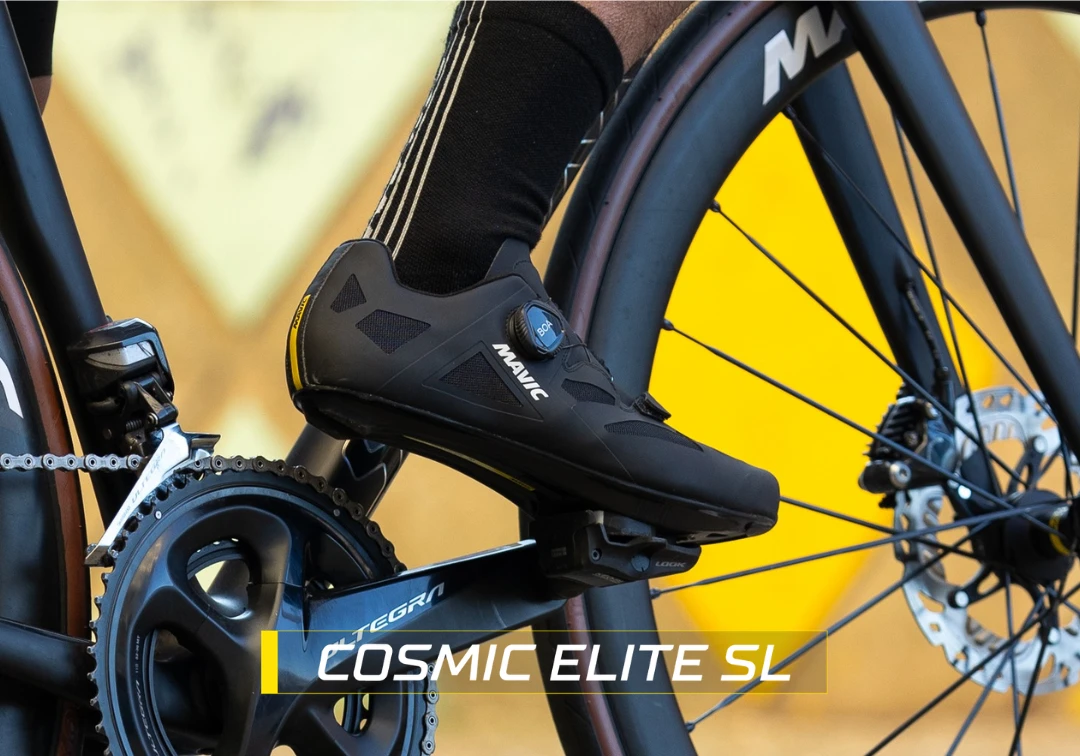
The Cosmic Elite SL road shoes are the training shoes in the lineup, featuring dual-system support and a carbon sole. The BOA® L6 dial handles the overall tightening, the front Velcro strap fine-tunes the fit around the forefoot, and the anatomical overlap construction wraps around the foot without constricting it. The energy transfer index of 70 falls short of racing models, but is sufficient to stabilize your footing during accelerations. The TPU upper, featuring mesh panels, wicks away heat, and the memory foam insole filters out vibrations. Made in Europe, 255g, €189.
Road Running Shoes: Cosmic SLR and Ultimate IV
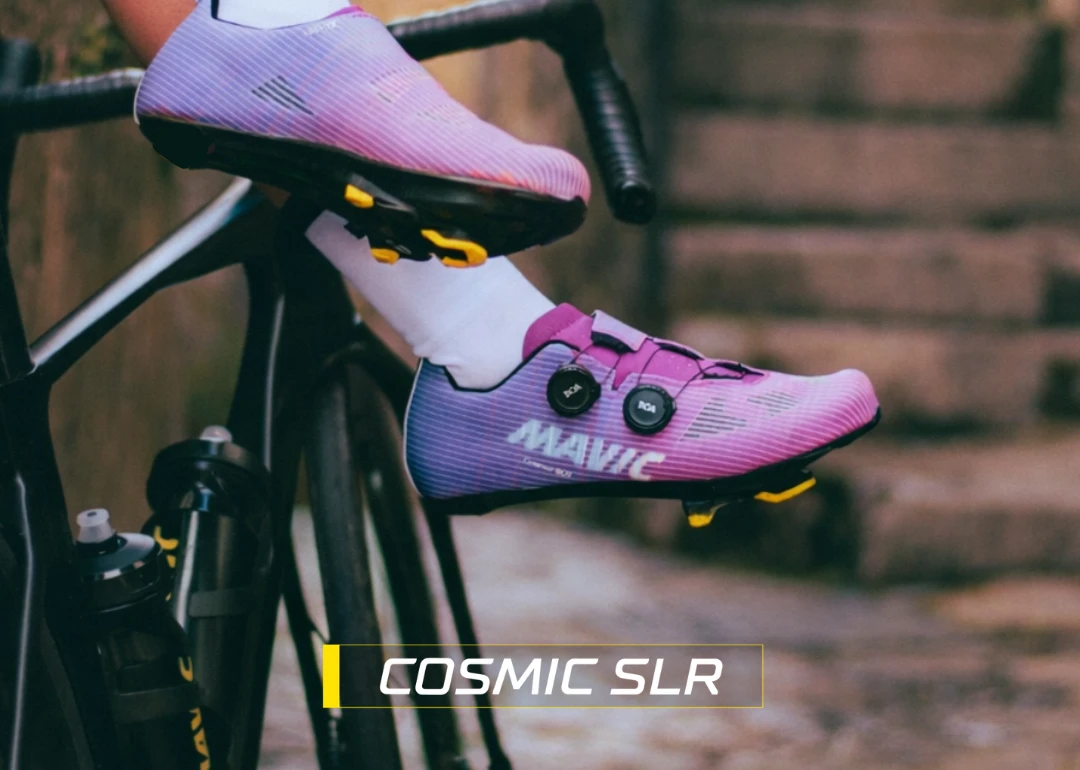
Both road running shoes in the lineup feature a Matryx® upper and a carbon sole. The Cosmic SLR road shoes combine a dual BOA® L6 lacing system across two zones with a carbon composite sole rated at 80/100: the two dials separately adjust the forefoot and instep, preventing the shoe from being over-tightened to secure the heel, and the front vents provide ventilation when temperatures rise, weighing 270g and priced at 249€.
Above, the Cosmic Ultimate IV road shoes are designed for competition, featuring a Matryx® Kevlar and polyamide upper with very low stretch, a perforated carbon sole under the forefoot, and a dual BOA® Li2 dial, weighing 245g.
Choosing the Right Road Cycling Shoes
Choosing the right road cycling shoe depends on the duration and intensity of your rides, then on checking three specifications on the product page: the sole stiffness rating, the closure type, and the weight. A 50/100 rating and a single-clip system are suitable for endurance rides; a 70 rating with a dual-clip system is ideal for interval training; and an 80/100 rating with dual dials is best for racing.
The rest comes down to trying them on, wearing the socks you’ll use on your rides. The road bike shoe lineup ranges from €119 to €249, with increasing stiffness.