$420.00
Response delays to inquiries from Oct 7 to 19. Order fulfillment as normal.
The rim brake is dead. Long live the rim brake!
Both halves are true at once, which is why we keep telling the joke. Ask for a new performance road frameset with brake bosses in 2026 and you will get a look. The industry settled this years ago. Every WorldTour bike, every platform launch, every press release points one way.
When a titanium All Road from Firefly Bicycles appears with Ksyrium SL Heritage wheels under it, the comments fill up with people saying what cyclists have said about good machines since 1889. Long live the rim brake.
The phrase isn't ours. It belongs to a real and persistent movement; the riders asking us to keep building rim brake wheels aren't imaginary.
There have been petitions for SAVE THE RIM BRAKE. There is even a Rim Brake Conservation Society, started in Calgary as a winter project, with one stated mission: to save the rim brake. As they put it, they are not there to tear down the disc. Magazines have run the argument under the same headline, and builder forums run it every few months.
The other side of the argument is just as fervent.
So let's be honest about the engineering before we get sentimental about the hardware. A good hydraulic disc brake modulates beautifully in the wet, holds its power on a long alpine descent, and does not wear the braking surface of your rim. If your riding is defined by steep wet descents, loaded touring, or racing in bad weather, discs are the right tool, and we build a full range for exactly that.
WHY RIDERS STILL CHOOSE A RIM BRAKE
Weight. Fewer parts in the system, so a rim brake build comes in lighter than an average road setup of the same spec. Most of the saving comes off the wheel, which is where riders feel it.
Simplicity. A cable, a caliper, two pads. You can understand the whole system by looking at it, and it works the moment you set it.
Serviceability anywhere. A rim brake can be adjusted on the roadside with a multi-tool.
Clean lines. An uninterrupted view of the frame, the fork and the wheel. On a bike built to be looked at, that counts for more than it should.
The bike you already own. There are millions of rim brake frames in the world with years of riding left in them, and nothing wrong with any of them.
None of that is nostalgia. It is a different set of priorities, and it belongs to riders who know exactly what they are choosing and what they are giving up.
Our position isn't complicated.
Our rim brake category lists the Ksyrium SL, the Ksyrium S and the Aksium. They are designed and manufactured in Europe, and the aluminum rims are made in our own rim factory. We still sell replacement rim brake pads, including Exalith pads for a rim treatment we introduced for the 2011 range. We still sell quick releases. Our stated commitment on replacement parts is seven years, and our customer service operates around the world.
This is what support looks like when it is not a slogan: parts for the wheels you have, and new wheels for the bike you want to build.
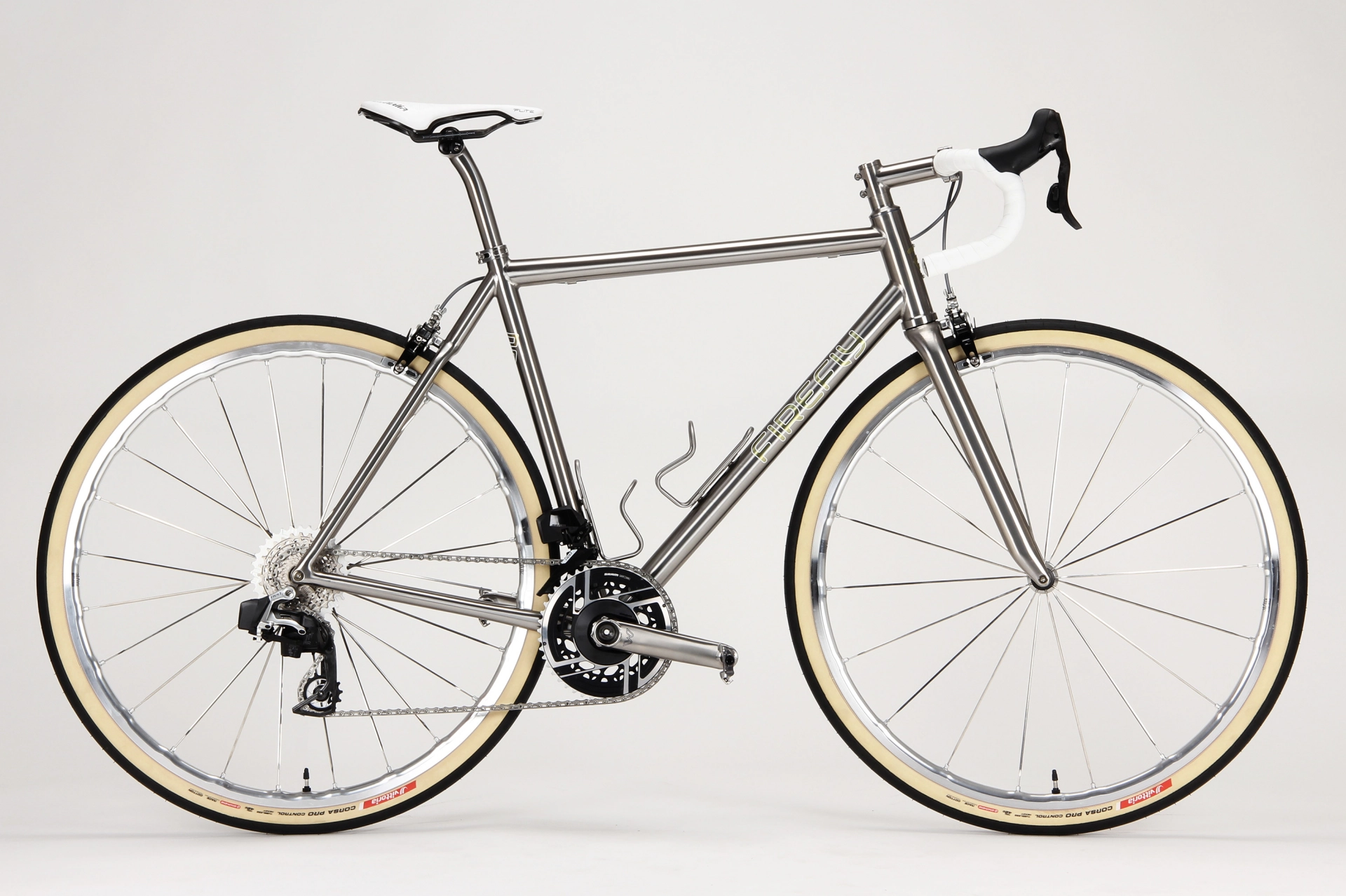
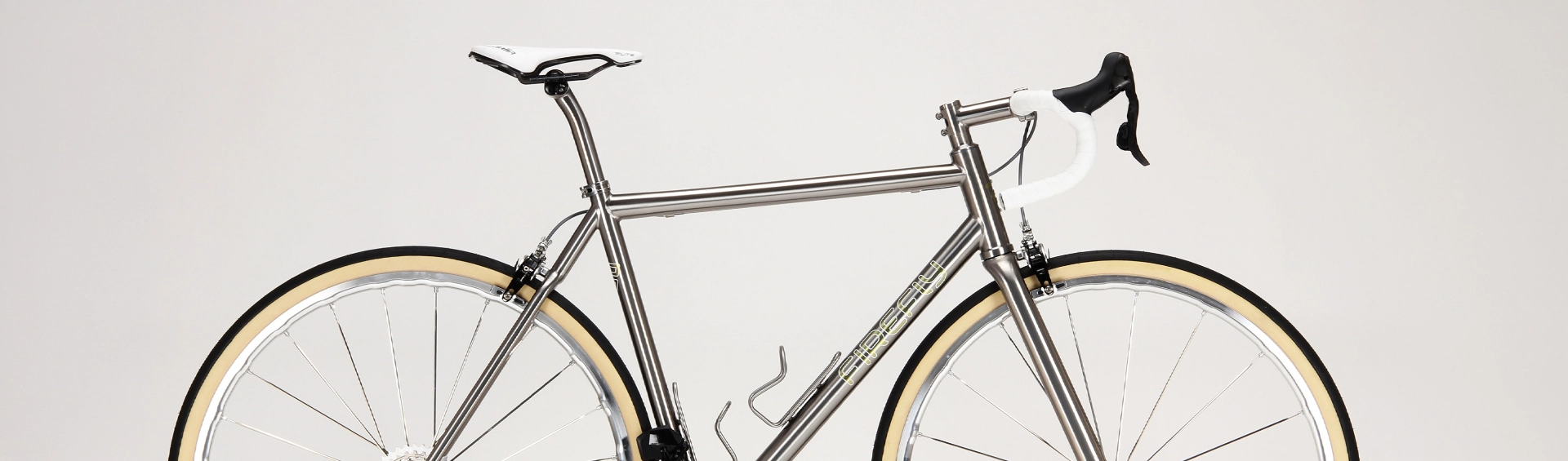
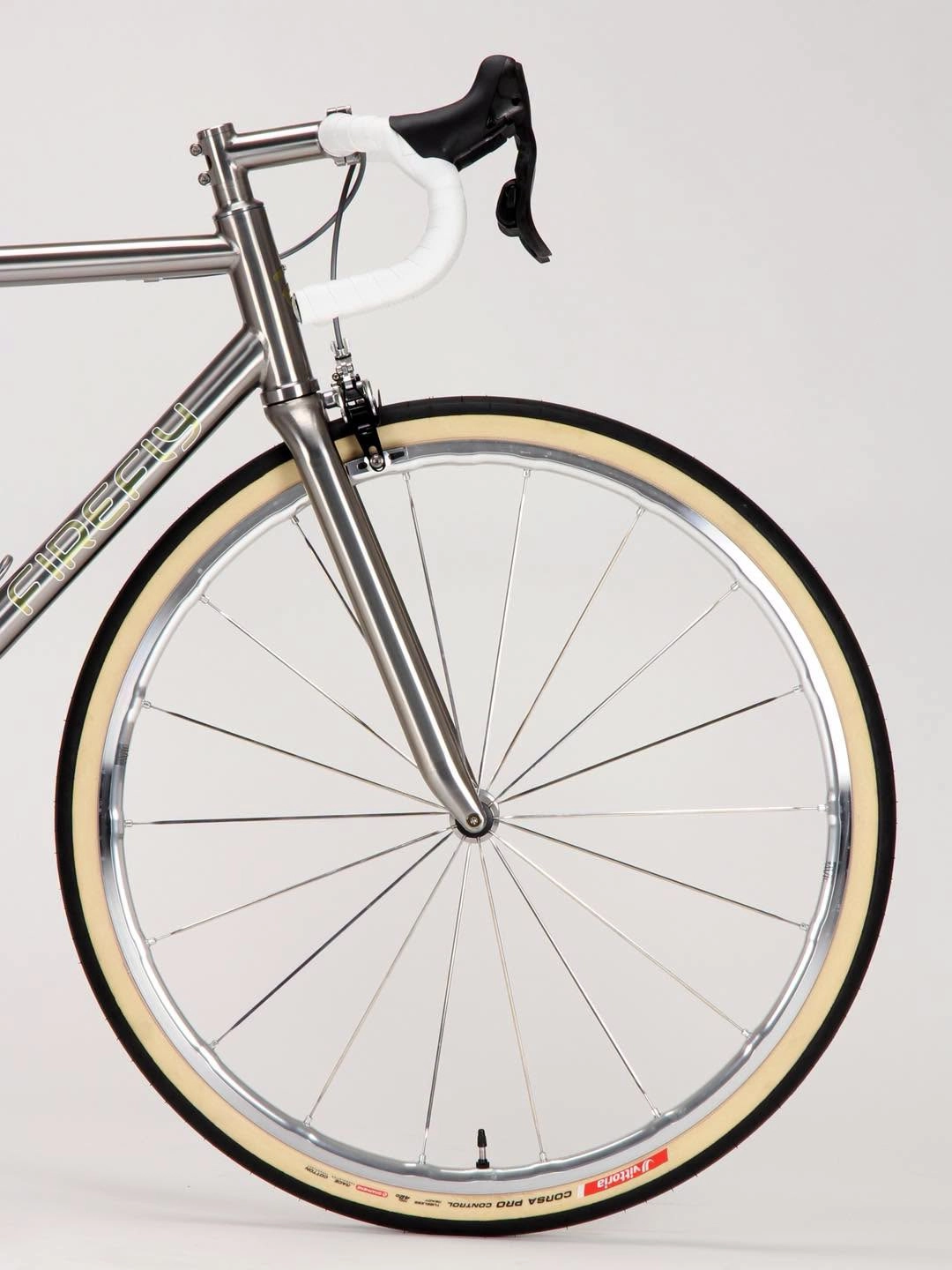
Firefly Bicycles built a titanium All Road around a rim brake in 2026, on purpose, for a customer who wanted it, and it's a beautifully crafted down to every detail. Almost every part of it had to be designed rather than selected, because the easy version of this bike is slowly dissapearing.
The frame. Titanium, built with Firefly's proprietary adaptive butted tubing, a three-piece tapered head tube, 3D-printed wishbone seat stays, and a 68 mm English-threaded bottom bracket. Clearance is 700x40 mm, which is the part that surprises people: this is a rim brake bike that takes a 40 mm tire.
The fork. A custom titanium Firefly Ti All Road fork, built for this bike with 40 mm clearance and custom offsets. This matters, because the first assumption people make when they see a modern rim brake build is that a disc fork has been repurposed with different dropouts. It has not. The fork was drawn for the job.
The brakes. This is the question we were asked most often when we posted the bike, so here is the answer: Cane Creek modified Brompton eeBrakes, a medium-reach caliper with traditional cable pull. Medium reach is what buys the tire clearance. Traditional cable pull is what keeps the bike compatible with the levers people actually want to use. Firefly recommends Growtac Control levers for riders running SRAM AXS, which is the kind of detail you only get from a builder who has solved the problem rather than described it.
The dropouts. Custom 3D-printed thru-bolt dropouts, compatible with all rim brake hubs, replacing the quick release entirely. Firefly's case is that they are lighter and stiffer than a conventional plate dropout.
That last one is the part the internet wants to fight about, and the fight is worth having out loud. When we shared this bike, more than one rider made the same point: you cannot beat a good old skewer. It is a fair objection. A quick release is faster at the roadside, it needs no tool, and it is one of the genuinely great pieces of bicycle design. The counter-argument is equally fair: a thru-bolt holds the wheel in a more consistent position, which on a rim brake bike means the pads sit where you set them every single time you put the wheel back in.
Both positions are correct. They are optimising for different things, which is the same argument as rim versus disc, played out one component down. That is what makes this bike interesting rather than merely pretty.
The wheels. Ksyrium SL Heritage.
Firefly chose this, and it's the choice that tells you what the wheel is for. Ksyrium is a storied name in this sport, and it earned that over three decades of riders putting it under bikes they cared about. When a builder working at this level specifies a wheel for a one-off titanium frameset, they are not picking a logo. They are picking something trusted to stay true and stay serviceable for as long as the frame lasts.
If you want the wheel that is on this bike, that is it: a 22 mm deep Maxtal rim, 19 mm internal, 1,480 g the pair, rim brake and quick release, in a finish made for exactly this kind of frame. See the Ksyrium SL Heritage.
Firefly lists this as a custom frameset with fork, with complete builds you can buy today. This is a bicycle where every decision was made on purpose, by people who could have taken the easy route and chose not to.
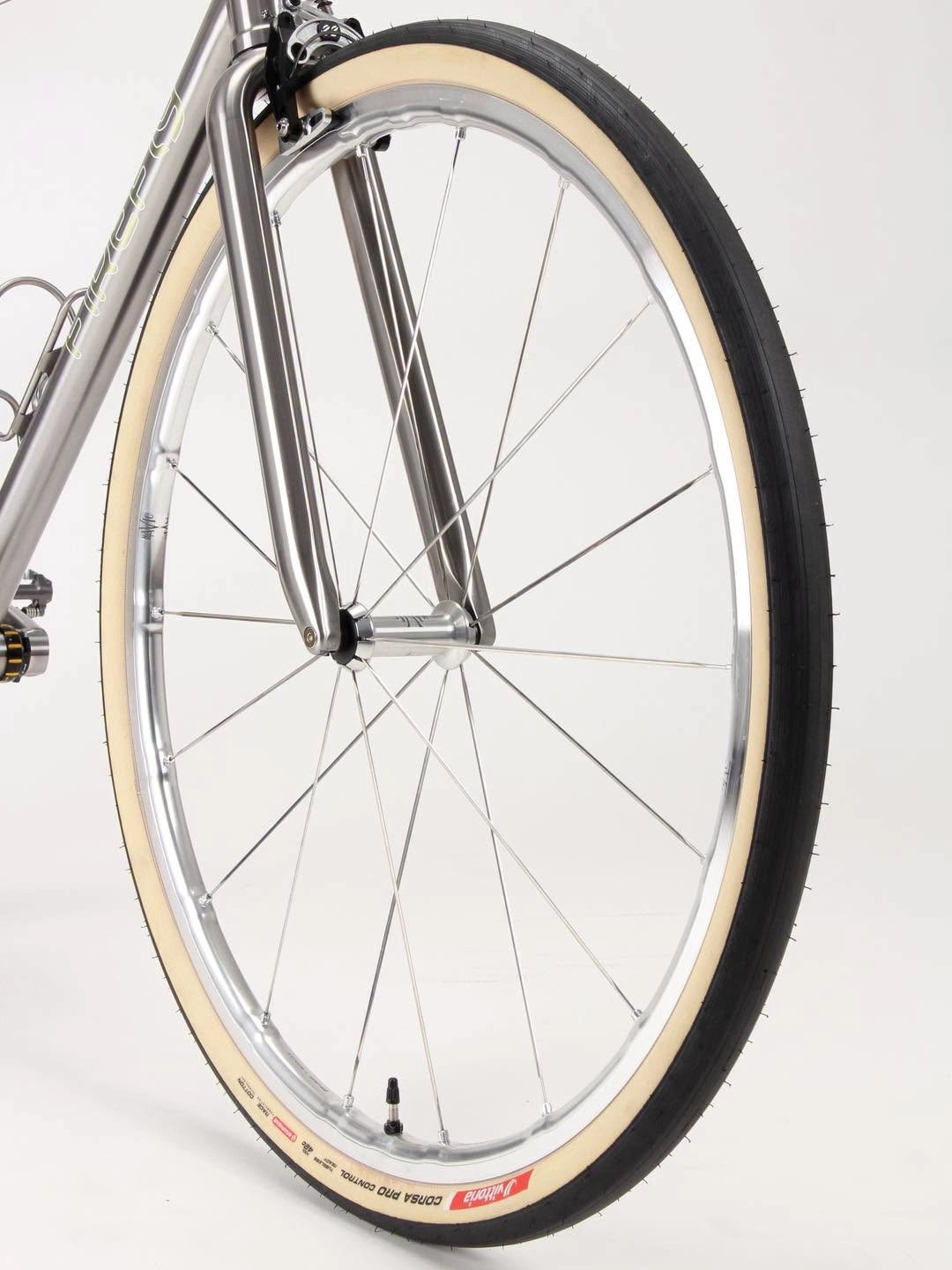
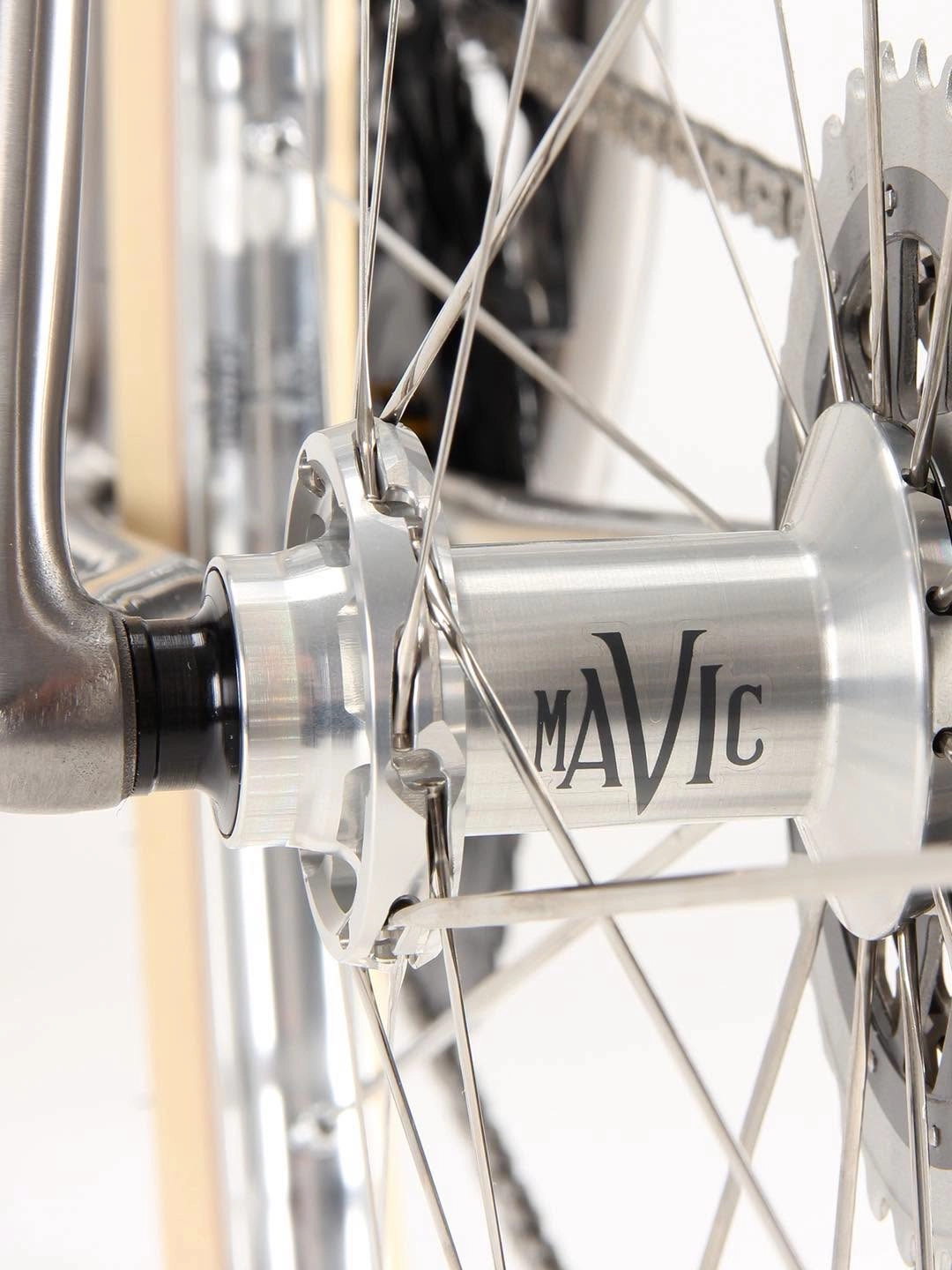
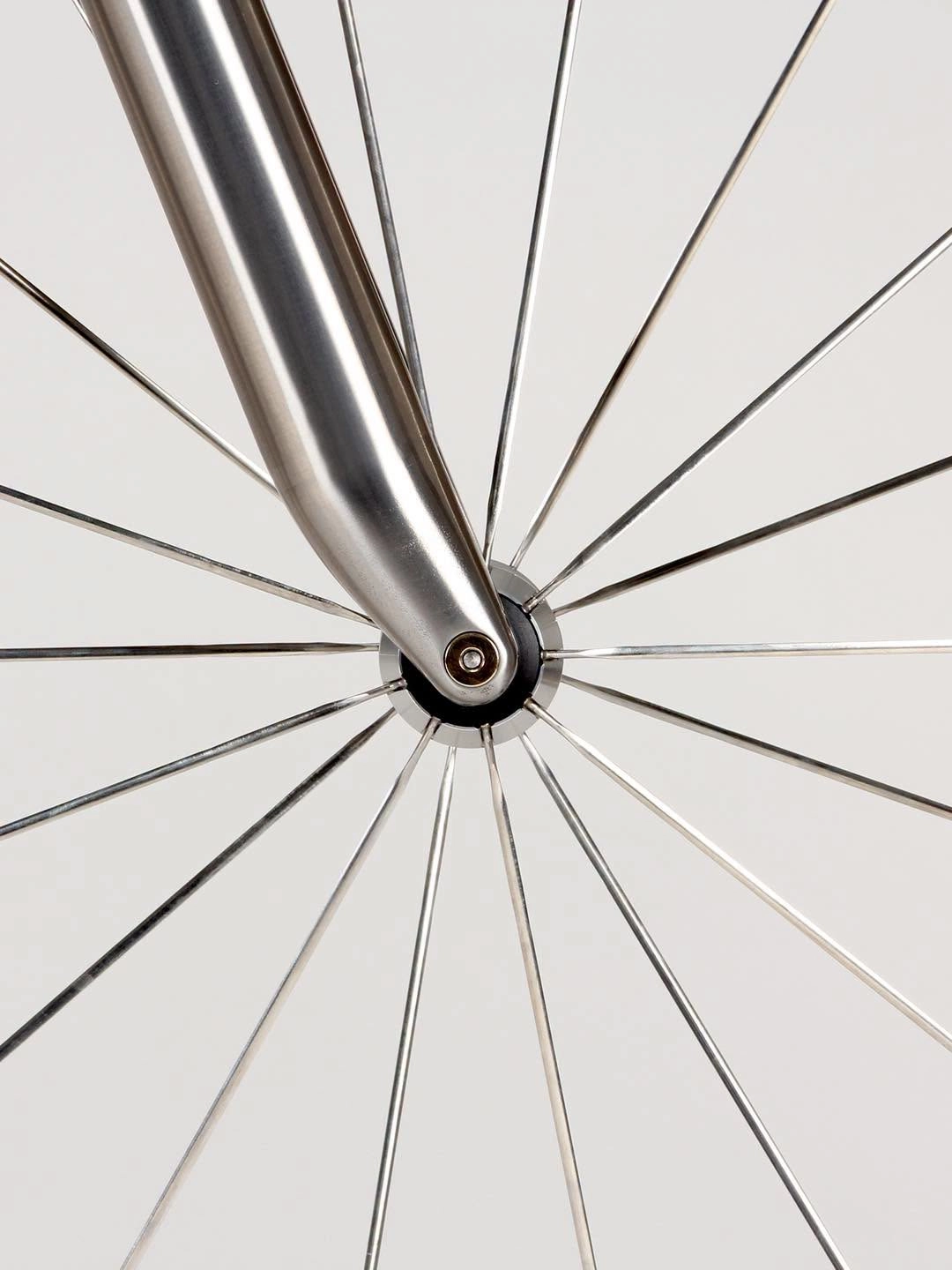
The rim brake wheels currently listed in the road category, from the everyday to the flagship. All of them are 700c, all of them run a quick release front and rear, and all of them are built to be serviced rather than replaced.
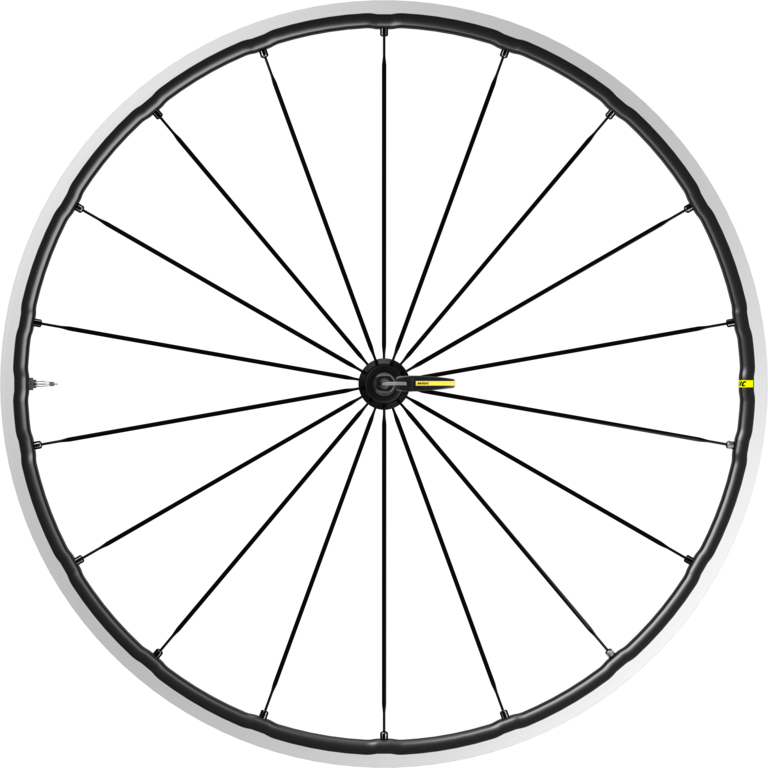
KSYRIUM SL
1,480 g the pair. A 400 g ISM4D rim, 22 mm deep and 19 mm internal, in Maxtal aluminum, made in France. Patented elliptical aero spokes, radial at the front and Isopulse at the rear. Infinity hub with Instant Drive 360 and QRM Auto bearing preload. Fore drilling, so it runs tubeless with no rim tape. This is the current flagship of the rim brake range and the wheel to build a good rim brake bike around.
KSYRIUM S
1,570 g the pair. The same Ksyrium thinking in a more accessible package, and a straightforward upgrade from almost any factory wheelset.
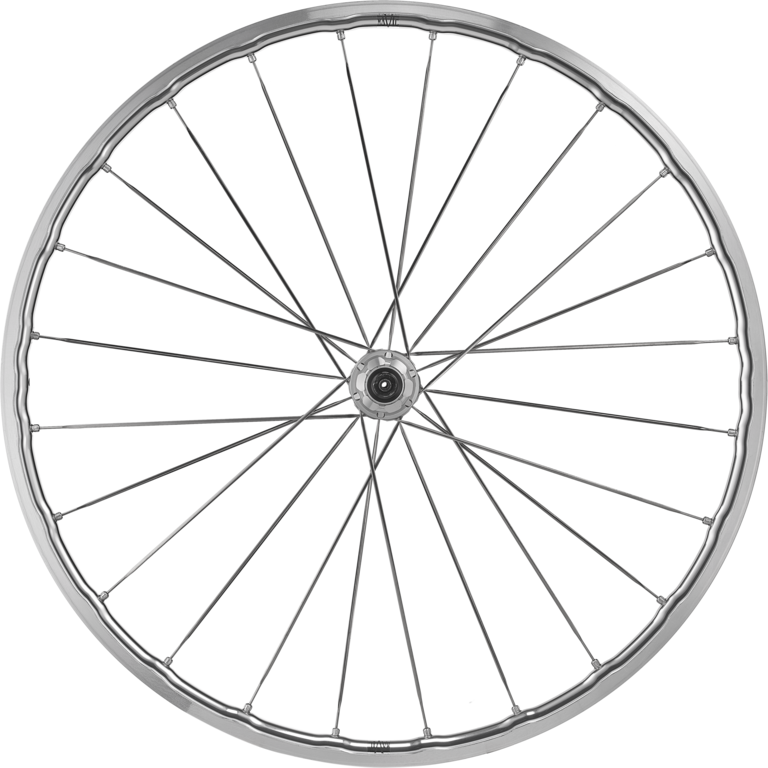
KSYRIUM SL HERITAGE
1,480 g the pair. The same 22 mm Maxtal rim and Infinity hub as the Ksyrium SL, laced 24 front and rear, in the finish Firefly chose for the bike at the top of this page. This is the one to ask for if you want that look.
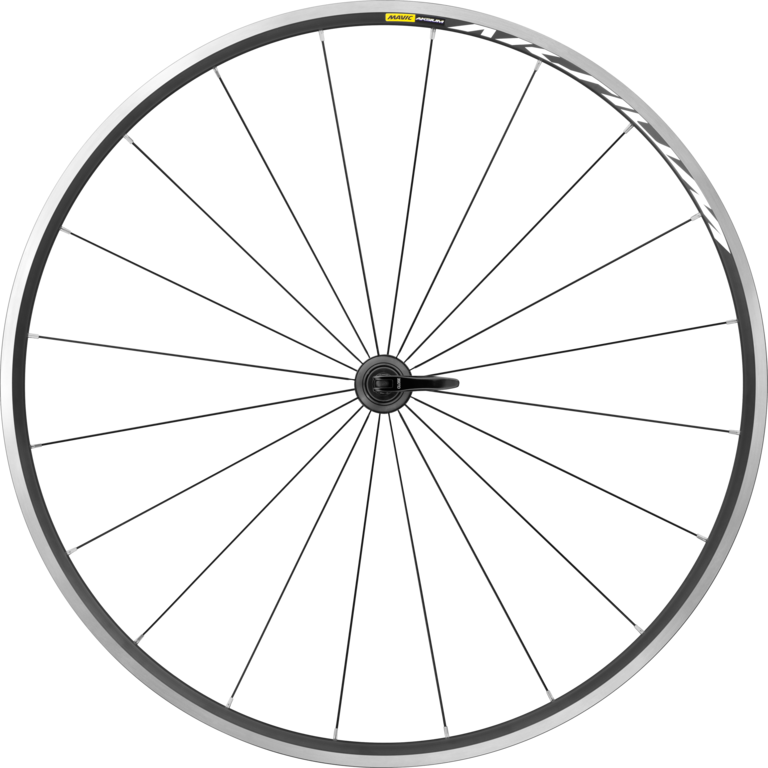
AKSIUM
1,840 g the pair. Straight-pull spokes, wider rims than the Aksium of a decade ago, and durable hubs. The everyday rim brake wheel, and the one we would put on a winter bike without thinking twice.
Every Mavic wheel carries a two-year warranty, extended to three years when you register the product. The Ksyrium SL ships for Shimano HG and converts to Campagnolo or SRAM XD-Road with an optional driver body.
If you ride Mavic rim brake wheels, these are the words on the box and what they actually mean.
Maxtal. Mavic's own aluminum alloy, with a higher strength-to-weight ratio than standard alloys. It is what lets an aluminum rim be light without being fragile.
ISM and ISM4D. A rim-machining process that removes excess material from between the spoke holes while leaving the rim wall thick where spoke tension and stress are highest. Strong where it matters, light everywhere else. On the Ksyrium SL it produces a 400 g rim.
Fore. The spoke thread is cut at the same moment the hole is drilled, and the spoke threads directly into the rim wall with no nipple nut. Only the lower wall is drilled, so the upper bridge of the rim stays intact. The result is a stiffer rim that is tubeless-ready with no rim tape, saving roughly 30 g a rim.
SUP welding. Soudé Usiné Process. After the rim is bent to shape, the joint is arc welded and then machined, which gives a stronger and smoother braking surface than a pinned joint. On a rim brake wheel the rim is also the rotor, so the quality of that joint is something you feel through the lever.
Isopulse. A rear lacing pattern: radial on the drive side, two-cross on the non-drive side. It balances spoke tension across the wheel and transfers power more evenly.
Infinity hub. A hub design built around consistent spoke tension and lateral stiffness, with no spoke-to-spoke contact, so the wheel stays quiet under load. Spokes can be replaced without removing the cassette.
Instant Drive 360. A double-ratchet freehub. Mavic has produced over 100,000 wheels with it, and it is compatible with all existing Mavic freewheel bodies.
QRM Auto. Qualité de Roulements Mavic. Double-sealed cartridge bearings with automatic preload adjustment, so there is no bearing cone to set by hand.
UST Tubeless. Universal Standard for Tubeless. Less friction, better grip, fewer punctures, and on these rims no tape to fit.
Exalith. A surface treatment applied to the braking track of certain aluminum rims, introduced for the 2011 range and revised as Exalith 2 a couple of seasons later. Mavic claimed a reduction in wet stopping distance of up to 18 percent for the second generation. Independent testers praised its wet braking and noted that it was noisy. We no longer build Exalith wheels. We still sell the pads, which is the point of the next section.
A rim brake wheel is a consumable in a way a disc wheel is not: the braking surface wears, and when it is gone the rim is gone. That is the real argument against rim brakes, and the only honest answer to it is a supply chain that does not disappear.
The industry has mostly moved on. That's not in dispute here.
What is also true is that a rider commissioned a titanium frameset in 2026 with a rim brake on it, a builder designed a fork and a set of dropouts to make it work, and a wheel with thirty years of history behind it turned out to be a choice we couldn't be happier to support. None of those three decisions were made by chance. They were made by people who knew precisely what they wanted.
We will keep building wheels for those people, and keep the pads on the shelf for everyone still riding the ones we built before.
A customer put it better than we have, in a review left on the Ksyrium SL product page this year.
Some might say it's crazy to spend this much on rim brake wheels these days but if you're going to do it I think these are great wheels to get. Glad it's an option and it completes my build beautifully.
Mike, Ksyrium SL owner, five-star review on mavic.com
GO DEEPER
Shop all Mavic rim brake wheels
Ksyrium SL Heritage, the wheel on the Firefly
The history of Mavic, from 1889
Photography courtesy of Firefly Bicycles.