$3,150.00
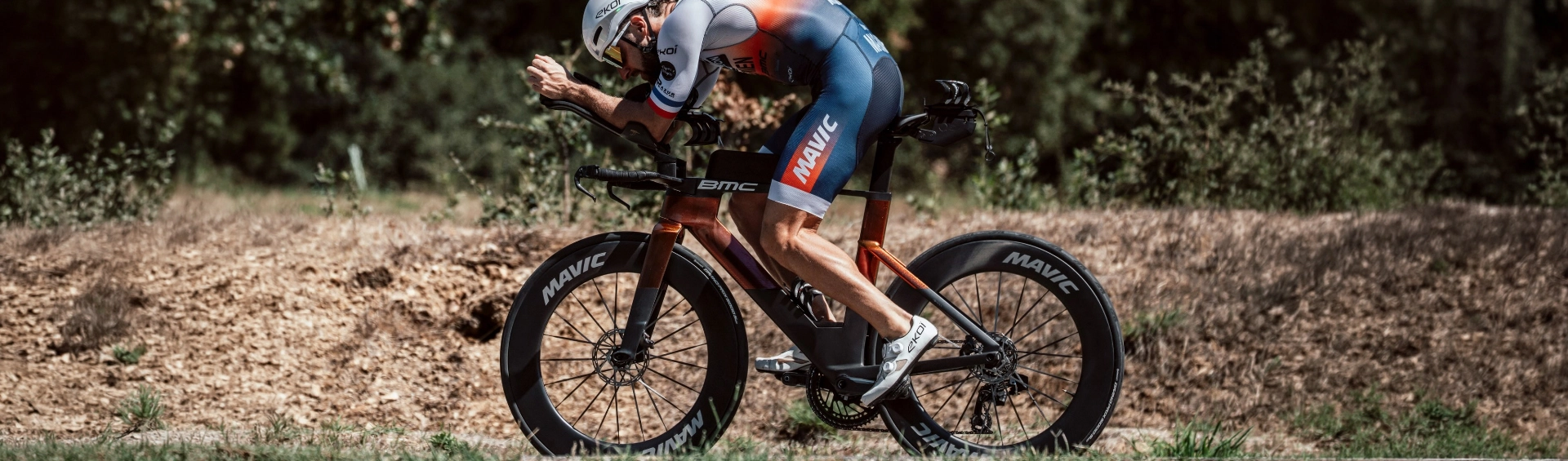
Dylan Magnien has raced the IRONMAN World Championship twice, in two places that ask for almost opposite things. Kona in 2024. Nice in 2025. In between, he won IRONMAN Lanzarote, one of the hardest bike courses on the calendar.
We asked him what actually separates those days, and the answer started before the start line.
"The biggest difference is probably everything that happens before the race," he says. "For a European athlete, racing in Nice is easier because you don't have to deal with jet lag, and the weather conditions in Kona can be extremely challenging, especially the heat and humidity."
Then there is the road itself.
"The bike courses are also very different. In Kona, it's a long out-and-back course, whereas Nice is a very hilly and technical course where you need to be a much more versatile rider. Personally, I prefer Nice because it suits me better, and I really enjoy varied courses."
At the front of the professional field, he is blunt about how much tactical room that leaves.
"For the pros, with the level of competition and the density of the field nowadays, there isn't really much of a strategy: you simply have to be able to follow the pace of the best riders and hope you can hold on until as late as possible before you blow up."
That is the honest version of a World Championship bike leg. For everyone racing further back, where the day is genuinely yours to pace, the equipment decisions matter more, not less.
There is a common assumption in long-course triathlon that the answer is always "deeper." Dylan's process is more ordered than that, and it begins somewhere most athletes never think to look.
"When choosing wheels, the first thing to consider is the regulations, just like in Kona where disc wheels are not allowed."
Rules first. Then the rear wheel, which is the simpler of the two decisions.
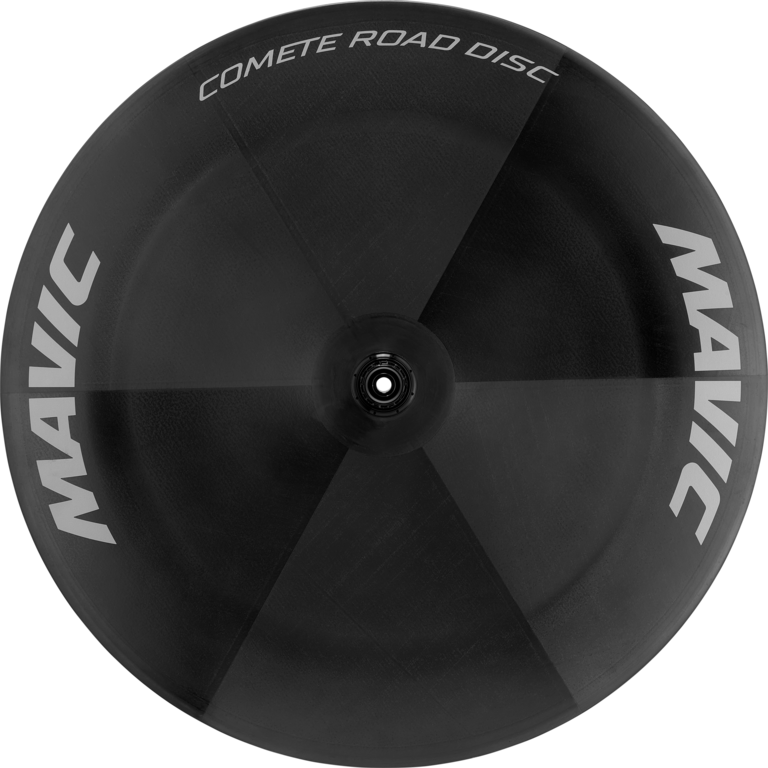
"At the rear, I always use a disc wheel because it is the most aerodynamic option and, at the speeds we ride at, those gains are really valuable."
Where a disc is not permitted, the logic does not change, only the hardware does.
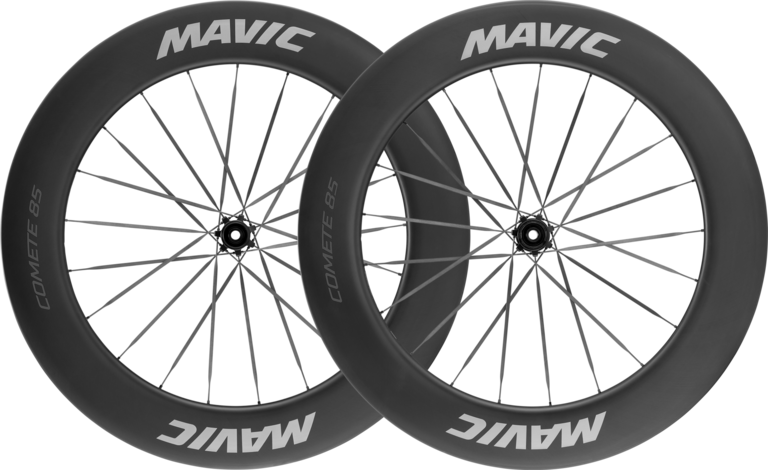
"Disc wheels are not allowed in Kona, so the goal is to use the most aerodynamic and deepest rear wheel possible. The Comete 85 is really ideal for the rear at Kona."
The front wheel is where the thinking gets interesting, because it is the wheel the wind actually acts on.
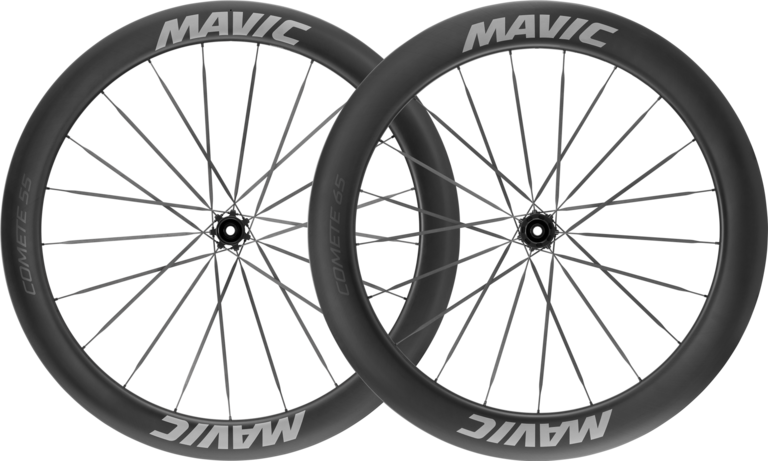
"For the front wheel, it depends on the course, the weather and the forecasted wind. On a completely flat course with no wind, I would go for the Comete 85 to maximize the aerodynamic gains. On a hilly course, I would probably choose the Comete 50 or 65 to save some weight and improve acceleration and responsiveness on the climbs."
For Kona specifically, he splits the difference deliberately.
"For the front wheel, it depends on the weather forecast, but personally, I prefer a slightly shallower wheel so I'm not pushed around too much if there are strong crosswinds. The Comete 50 or 65 would be a great combination."
A deep rear and a shallower front is not a compromise. It is a mixed-depth setup chosen on purpose, and it is the same principle behind the Comete aero range: put the depth where it buys you speed, and back it off where it starts costing you control.
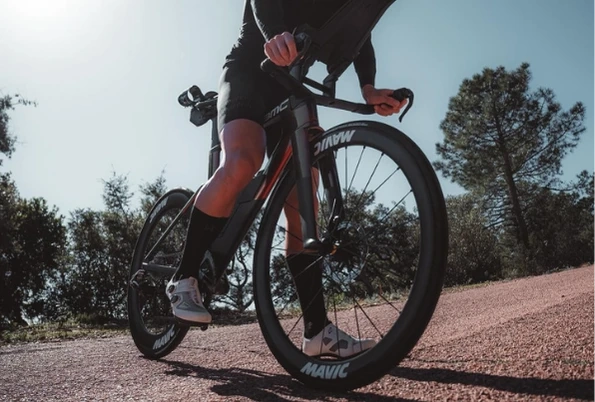
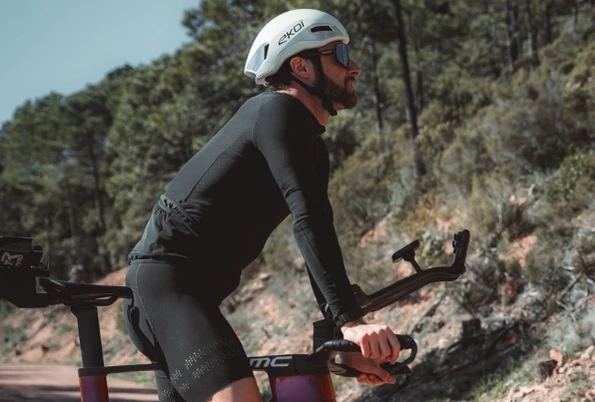
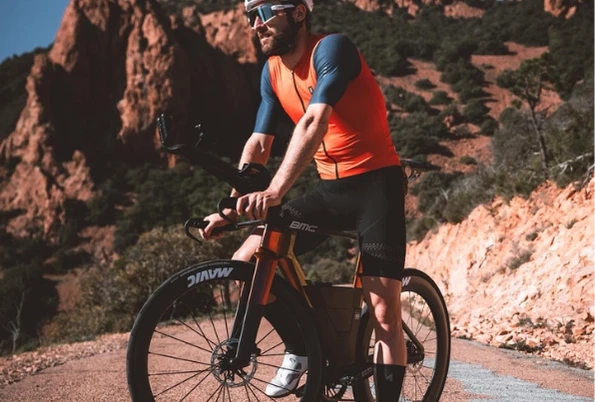
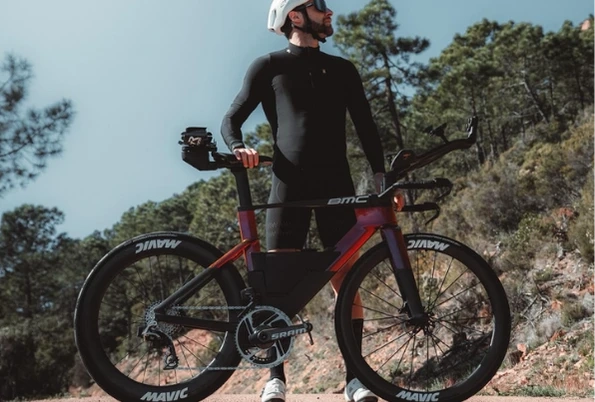
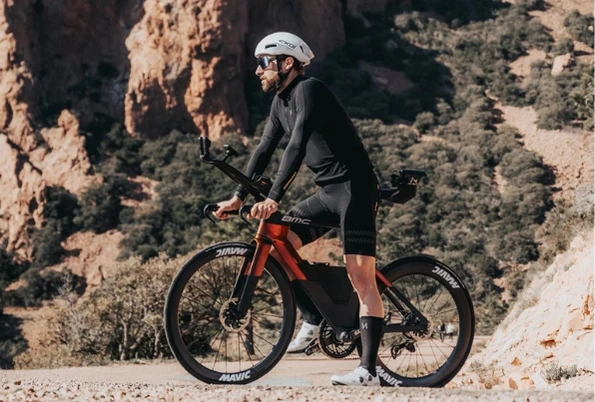
A time trial wheel is asked to be fast for an hour. An IRONMAN wheel is asked to be fast for the length of a working day, and then hand the athlete off to a marathon in a state to run it.
That changes what "fast" means.
"For me, the bike leg of a triathlon is all about being as fast as possible while using as little energy as possible, so that you can save as much strength as possible for the run. That's why choosing the right wheels is so important, and why aerodynamics are a crucial factor for me."
But aerodynamics alone is not the specification. Stability is doing work that never shows up on a drag chart.
"You also need a wheel that handles well in the wind and at high speeds, and that's where the Comete range is really great, with wider rims that provide more stability."
Lanzarote in 2025 is the case study. It is a race with a reputation built on wind and a bike course that does not relent, and Dylan won it.
"Ironman Lanzarote is one of those iconic races that is renowned for being extremely challenging. I'm very proud to have won it in 2025. When you win a race with a good time, you sometimes feel like everything was easy during the race. But actually, it was only after the race that I realized how much it had taken out of me. I was completely exhausted for several weeks, whereas normally, two or three weeks after an Ironman, I'm already feeling back to normal."
That is worth sitting with. A day that felt controlled from the outside cost him weeks. The equipment cannot make that day cheap. It can only stop it from being more expensive than it needs to be.
The single most repeated piece of advice in the whole conversation had nothing to do with which wheel to buy. It was about when to find out.
"For every athlete, whether amateur or professional, the goal is to ride as fast as possible while using as little energy as possible. That's why I think it's important to be able to test your wheel setup before the competition."
And on a course with real elevation, the disc is not an automatic answer either.
"On a hilly course like Nice, depending on your average speed over the bike course, it's definitely worth testing your setup before the race to see whether a disc wheel, with its aerodynamic benefits, is more advantageous than a shallower wheel, which is lighter and more responsive."
Your average speed is part of the equation. Aerodynamic savings scale with how fast you are travelling, so the right answer for a five-hour bike split is not always the right answer for a four-hour one.
Ask a professional what success in an IRONMAN means and you expect a number. A time, a place, a split. Dylan does not go there.
"For me, success in an Ironman is mainly about the process, the journey you go through during the months leading up to your goal. The hardest part, if you want to succeed in an Ironman, is all the work you put in beforehand and the long training sessions."
Which inverts how most people think about race day.
"Race day is the reward, when you get to put all the work you've done in training into practice. The race itself is the 'easy' part of the whole preparation. You get to share all the work and emotions you've experienced with the people close to you during the race."
Easy is doing some heavy lifting in that sentence. He is precise about where the day actually gets hard.
"The hardest part of an Ironman is sticking to your plan, nutrition and pacing, despite the pain. At certain points, you just want to be able to take a break, whether it's walking or stopping pedaling for a while, before continuing. But unfortunately, the clock keeps ticking, so you just keep pushing through the pain."
For anyone building toward a first one, his advice is about expectations rather than equipment.
"Competition is simply a repetition of what you do in training. And above all, an Ironman is still an Ironman, you have to respect the distance. During the race, you'll go through difficult moments as well as moments of flow. If you want to succeed in an Ironman, you need to find solutions quickly when things get tough and, at the same time, avoid getting carried away too much when everything is going well."
Find solutions quickly when it is bad. Do not spend the whole day when it is good. That is a pacing strategy and a mental strategy at the same time.
Careers are not built on the good seasons. Asked what has shaped the way he races more than anything else, Dylan did not name a race, a result, or a piece of equipment. He named persistence.
I think the most important thing for success is to keep working hard through the difficult periods as well as the good ones, but above all, to always believe in yourself. If you work hard for months and years, one day you will be rewarded! In 2025, I had the best season of my career, even though I went through a very difficult season in 2024, including a long period of depression. But I never stopped believing in myself, and just a few months after coming out of that difficult period, I achieved the best results of my career!

The wheels are the part we can help with. Choose the depth you can hold a position on, put the aerodynamics where your speed makes them pay, and test the setup long before the race number goes on.
The rest is months of work nobody watches, cashed in on one day.